What is a Strategic Analysis Framework?
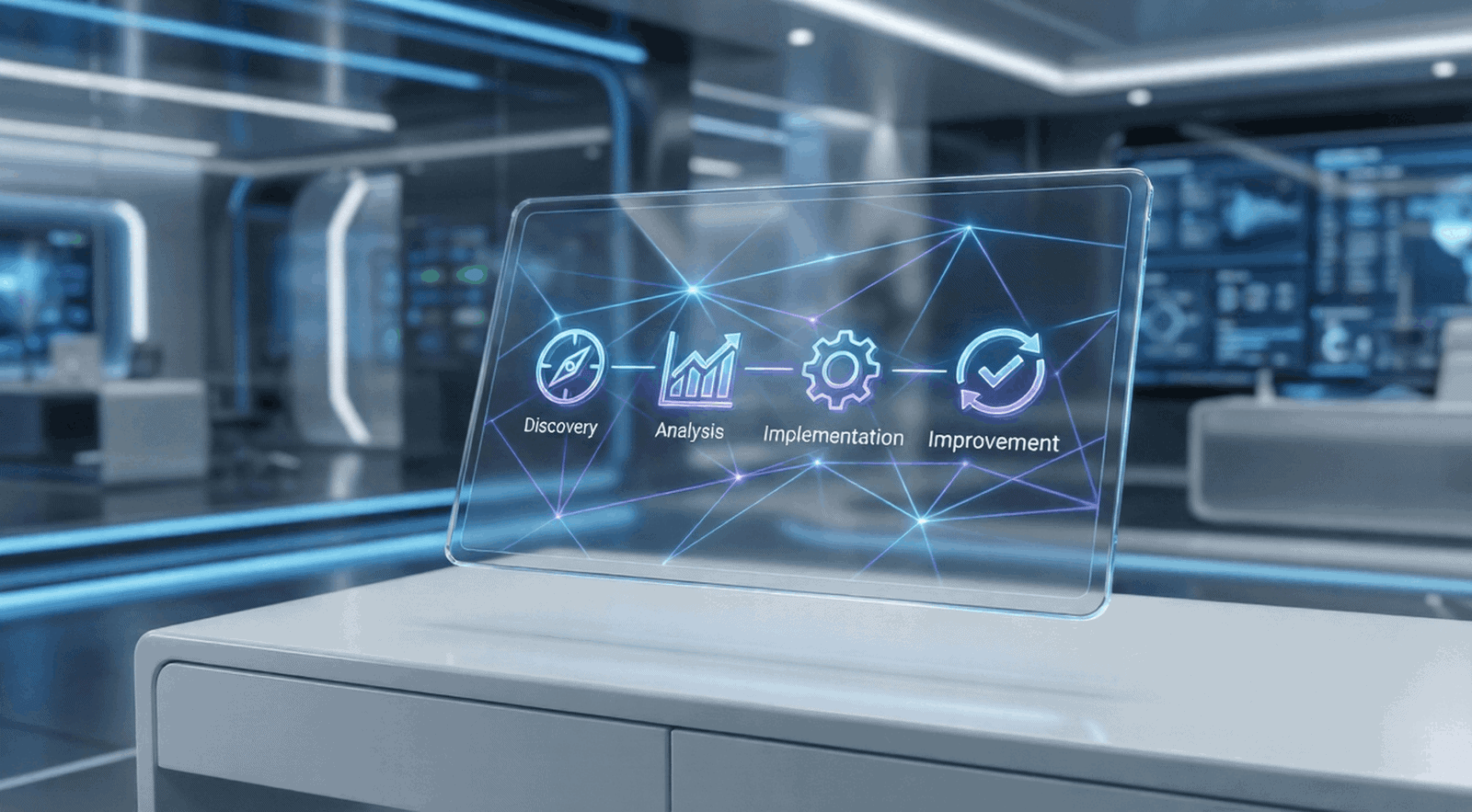
A strategic analysis framework is a structured, 4-stage methodology (Discovery, Strategic Analysis, Implementation, and Continuous Improvement) used by business leaders to evaluate internal capabilities, analyze external market forces, and execute sustainable business growth.
Most strategic plans are dead on arrival. They are either too academic to be practical or too vague to be actionable.
You’ve seen it before: a leadership team spends two days off-site, creates a few colorful slides, and then returns to the office, only for those strategies to gather digital dust. The problem isn’t a lack of ambition; it’s a lack of a structured, end-to-end framework.
To win, you need to bridge the gap between Discovery and Improvement.
This is where the Strategic Analysis Toolkit turns theory into a competitive weapon.
| Strategic Phase | Key Frameworks & Tools | Primary Objective |
| Discovery | PESTLE, Porter’s Five Forces, Value Chain | Map macro-environment and operational capabilities |
| Analysis | SWOT, GOST, Ansoff Matrix, Blue Ocean | Synthesize market intelligence into strategic options |
| Implementation | TOWS Matrix, Balanced Scorecard | Prioritize actionable initiatives and set metrics |
| Improvement | Kotter’s 8-Step, PDCA Cycle, Scenarios | Manage change and maintain operational agility |
What is the Foundation Stage of Strategic Analysis?
Before you can decide where to go, you must understand where you are. Most companies skip this step, jumping straight to solutions.
A robust strategy begins with Discovery and Foundation. You need to look outward using a PESTLE analysis (Political, Economic, Social, Technological, Legal, and Environmental) to understand the macro-forces at play. Simultaneously, you must examine your industry through Porter’s Five Forces, identifying who actually holds the power: your suppliers, your buyers, or your competitors?
Finally, look inward. A Value Chain Analysis isn’t just a corporate exercise; it’s a surgical examination of your operations to pinpoint exactly where you create value and where you’re wasting resources.
How Do You Perform Strategic Synthesis & Analysis?
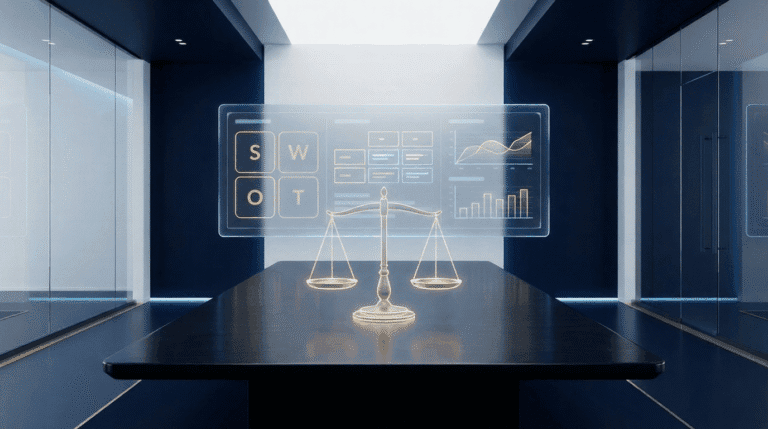
Once you have the data, you need to make sense of it. Many leaders fall back on a basic SWOT analysis. But a SWOT is just a list unless it’s tied to a GOST framework. By defining your Goals, Objectives, Strategies, and Tactics, you turn a strength into a market advantage.
Are you looking for growth?
The Ansoff Matrix helps you choose between market penetration and diversification, while a Blue Ocean Strategy empowers you to stop competing in bloody price wars and start creating new, uncontested spaces.
The Toolkit Advantage: Manually aligning these frameworks is a nightmare of spreadsheets and broken links. The Strategic Analysis Toolkit automates the integration of your Discovery data with your Strategic Analysis, ensuring your GOST is backed by real-world PESTLE insights.
How Do You Implement Strategic Frameworks in Business?
This is the Missing Link. Most strategies fail here because they lack prioritization logic.
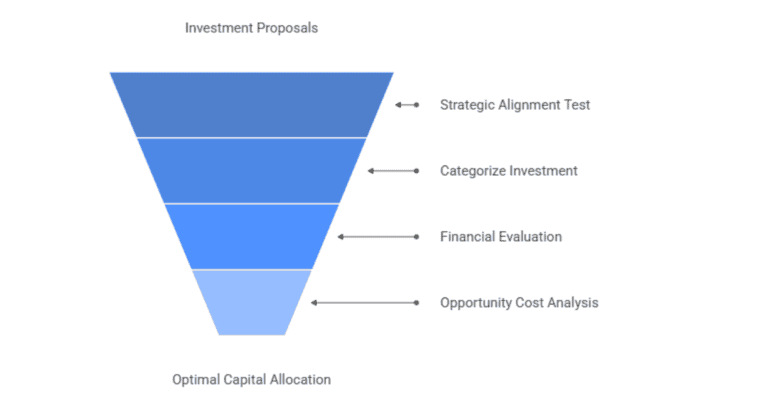
To fix this, you need the TOWS Matrix. While SWOT lists factors, TOWS turns them into actions by pairing your strengths with your opportunities. But you can’t do everything at once. TOWS Prioritization is the filter that tells you what to execute now and what to discard.
How do you track success?
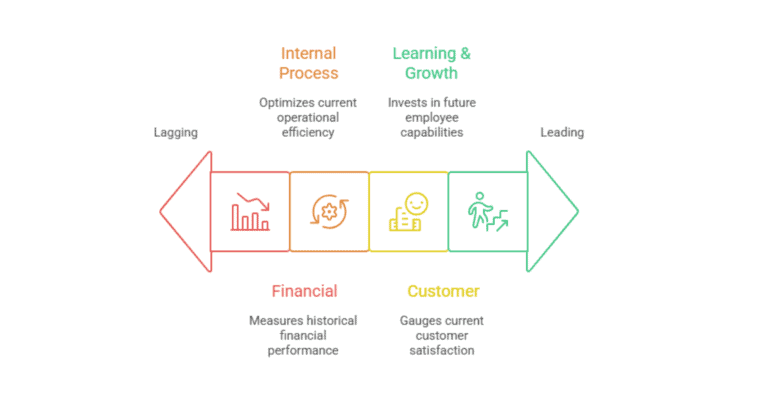
You use a Balanced Scorecard. By looking at Financial, Customer, Internal Process, and Learning/Growth metrics, you ensure you aren’t just chasing short-term profit at the expense of long-term health.
How Do You Measure & Refine Strategic Change?
The market moves. Your strategy must move with it.
Implementing a new strategy requires more than a memo; it requires Kotter’s 8-Step Plan for leading change. You must create urgency and build a guiding coalition. Once the change is underway, the PDCA Cycle (Plan-Do-Check-Act) ensures you continually refine your approach based on real-world feedback.
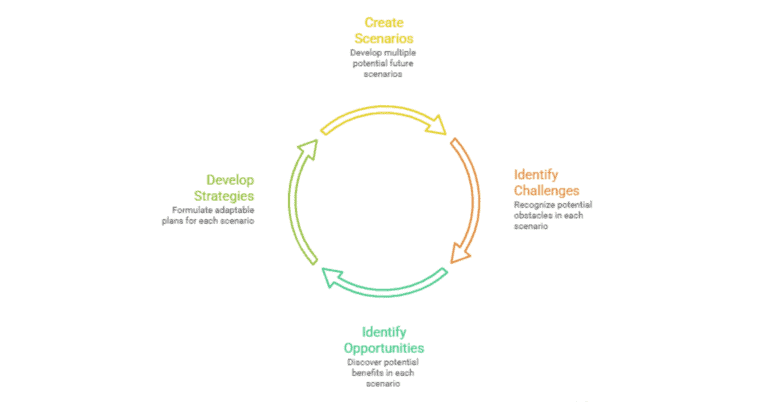
Finally, the most resilient companies use What-if Scenarios. What if the currency devalues? What if a competitor enters the market? By running these scenarios through the Strategic Analysis Toolkit, you aren’t just reacting to the future; you’re prepared for it.
Frequently Asked Questions
What are the 4 main stages of a strategic analysis framework?
The four main stages are Discovery, Strategic Analysis, Implementation, and Continuous Improvement. Discovery focuses on mapping internal and external environments; Analysis synthesizes data into actionable strategies; Implementation prioritizes tasks and establishes metrics; and Improvement ensures ongoing adaptability through structured change management.
What is the primary difference between a SWOT analysis and a TOWS matrix?
A SWOT analysis lists your Strengths, Weaknesses, Opportunities, and Threats as standalone observations. A TOWS matrix takes those insights further by pairing internal factors with external factors (such as Strengths–Opportunities or Weaknesses–Threats) to create actionable, prioritized strategies.
Why do most strategic plans fail during the implementation stage?
Strategic plans typically fail during execution due to a lack of prioritization logic, clear ownership, and measurable tracking. Without structured frameworks like the TOWS matrix to select focus areas and a Balanced Scorecard to monitor operational metrics, strategic goals remain high-level concepts rather than executed tasks.
How does continuous improvement fit into a business strategy framework?
Continuous improvement ensures that strategy adapts to shifting market conditions and customer feedback over time. Utilizing frameworks like the PDCA (Plan-Do-Check-Act) cycle and Kotter’s 8-Step Change Model allows organizations to refine processes dynamically rather than treating strategy as a static, one-time document.
Stop Working Harder, Start Working Smarter
Strategy doesn’t have to be a 50-page document that no one reads. It should be a living, breathing engine of growth.
The Strategic Analysis Toolkit provides the standardized, professional structure that top-tier consultants use to move from raw data to executive-level summaries in a fraction of the time.
Ready to bridge the gap?
Explore the Strategic Analysis Toolkit today and build a strategy that works.