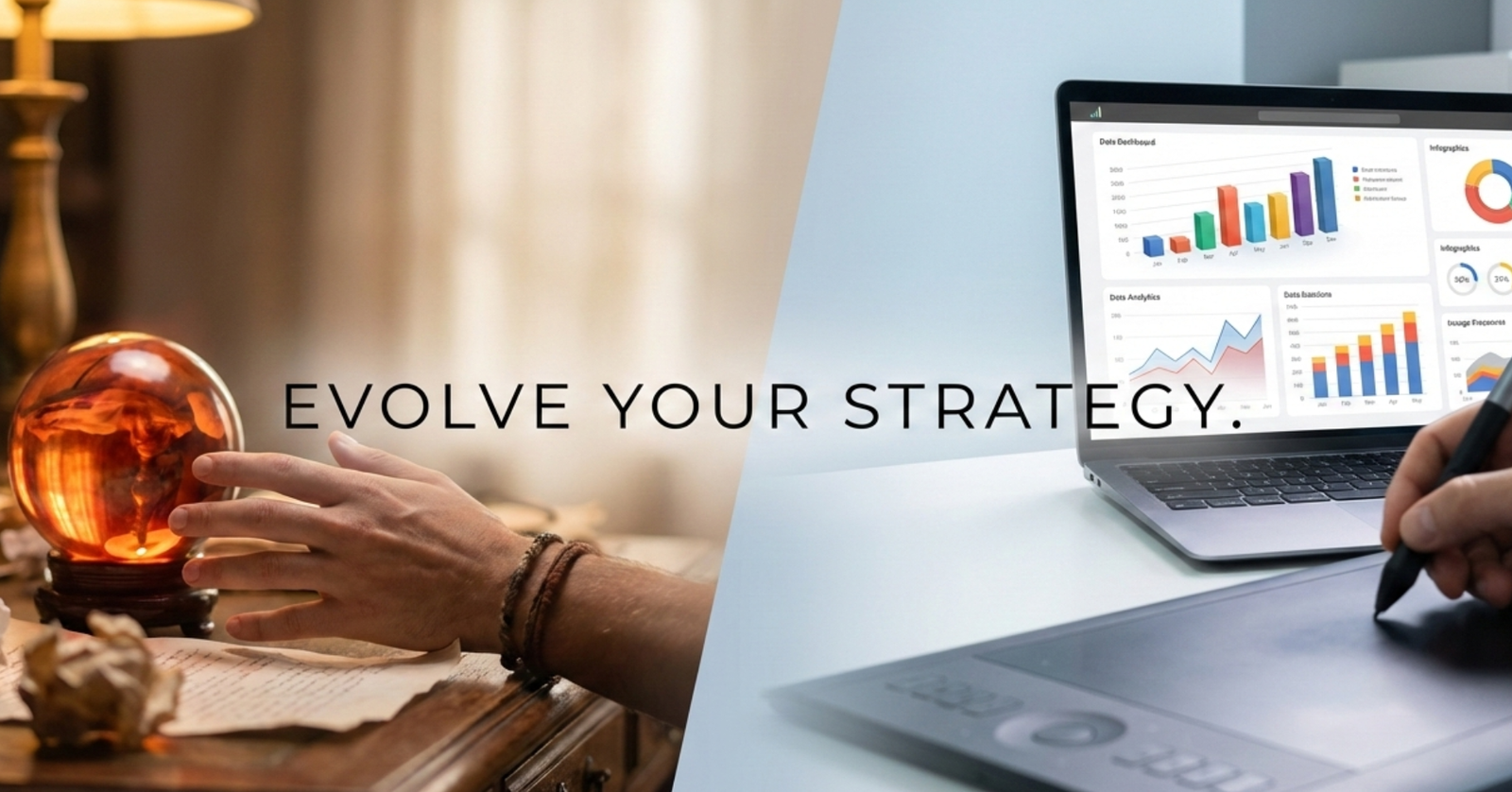
In business, the only constant is change. Yet, many organizations still rely on static, annual strategic plans that are often obsolete before the ink is dry.
Successful leaders recognize that strategy must be as dynamic as the market. Whether you are a startup founder, a growth-stage executive, or the leader of a mature organization, your strategic needs evolve as your business progresses through its lifecycle.
Foundational Discovery: Starting with Precision
Every great success begins with a clear understanding of the environment. In the early stages, your priority is Discovery and Foundation. Using tools like PESTLE Analysis helps you scan for macro-environmental shifts in technology or regulation before they become crises. Coupled with Porter’s Five Forces, you can evaluate industry competition and buyer power to identify your most viable entry point. Finally, Value Chain Analysis helps you identify the internal activities that will provide your initial competitive advantage.
Scaling for Impact: The Growth Phase
Once you have established your foundation, the challenge shifts to scaling. This requires deep Strategic Analysis. By conducting a rigorous SWOT analysis, you can identify internal strengths and external opportunities that will drive growth. The GOST framework ensures that your high-level goals are backed by tactical execution, while the Ansoff Matrix helps you decide whether to penetrate existing markets or develop new products. This stage is about focus and alignment, ensuring every resource is directed toward sustainable growth.
Value Innovation: Leading the Mature Market
For established businesses, the most significant risk is the red ocean, a crowded market with shrinking margins. Maturity requires Implementation Planning that focuses on differentiation. Blue Ocean Strategy enables you to create an uncontested market space, making the competition irrelevant. By using the TOWS Matrix and Prioritization, you can turn your strategic insights into actionable maneuvers. The Balanced Scorecard then provides the metrics to ensure your long-term health is never sacrificed for short-term gains.
Resilient Transformation: Mastering the Pivot
Even the most successful models eventually require transformation. When the market shifts, your ability to manage Change and Improvement determines your survival. The Kotter 8-Step Plan provides a human-centric roadmap for leading organizational change, while the PDCA Cycle ensures your improvements are continuous and data-driven. With Executive Summaries and What-If Scenarios, you can stress-test your new direction against hypothetical market disruptions before committing your capital.
Take Control of Your Strategic Future
Strategic intelligence shouldn’t be a luxury reserved for the Fortune 500. The Strategic Analysis Toolkit democratizes professional-grade consulting methodologies, delivering 13 world-class frameworks in a single, intuitive platform. From AI-driven insights to real-time scenario modeling, our toolkit empowers you to navigate your business lifecycle with the precision of a top-tier consultant.
Ready to transform your strategy from a static plan into continuous intelligence?
Deep Dive into Framework Mechanics and Synergy
To fully appreciate the power of an integrated toolkit, one must examine how individual frameworks interact to create a multiplier effect on strategic value.
The Synergy of PESTLE and SWOT
By itself, a PESTLE analysis identifies external factors, while a SWOT analysis identifies internal factors. However, when integrated into the Strategic Analysis Toolkit, the Opportunities and Threats sections of the SWOT are automatically informed by PESTLE data. For example, a technological shift identified in PESTLE (such as the rise of generative AI) is immediately categorized as an Opportunity (if the firm has R&D capacity) or a Threat (if the firm’s product is at risk of obsolescence).
The Relationship Between Value Chain and Blue Ocean
Value Innovation, the core of Blue Ocean Strategy, requires an organization to reduce costs and increase value simultaneously. By using Value Chain Analysis to identify low-value-added activities that can be eliminated or reduced, the firm frees up resources to raise or create new factors that the industry has never offered. This interplay is the mechanism by which organizations break the traditional value-cost trade-off.
Bridging Intent and Action: GOST and TOWS
The GOST framework defines the intent (what we want to achieve), while the TOWS Matrix outlines the action (how we will maneuver to get there). By integrating these, the toolkit ensures that a Strategy in GOST is directly derived from the SO, ST, WO, or WT maneuvers identified in the TOWS Matrix. This logical continuity prevents strategic drift, in which the organization’s actions are no longer aligned with its goals.
Sector-Specific Use Case Analysis
The Strategic Analysis Toolkit is designed for versatility, offering guidance across diverse sectors, including consulting, corporate strategy, and nonprofits.
Management Consultants and Advisory Firms
For consultants, the toolkit serves as a force multiplier. It enables the rapid generation of professional-grade reports for M&A due diligence, market-entry studies, and restructuring projects. By reducing manual research labor, consultants can focus on high-level synthesis and relationship management.
Corporate Strategy Teams
Internal strategy teams use the toolkit for annual reviews and capital allocation decisions. What-if scenario modeling is particularly valuable for evaluating the performance of different business units under varying economic conditions. It enables the strategy office to present data-driven recommendations to the board with a high degree of confidence.
Small and Medium Businesses (SMBs)
SMBs often lack the budget for high-priced consultants. The toolkit democratizes access to this expertise, enabling founders to prepare comprehensive analyses for investor funding presentations or business model pivots. The focus on unit economics ensures sustainable growth.
Healthcare and Non-Profit Organizations
In the healthcare sector, the toolkit helps navigate regulatory changes and optimize service-line strategies. For nonprofits, frameworks such as the Balanced Scorecard ensure that the mission (rather than just profit) remains at the center of all strategic decisions, balancing the needs of various stakeholders.
The Role of AI in Eliminating Analyst Bias
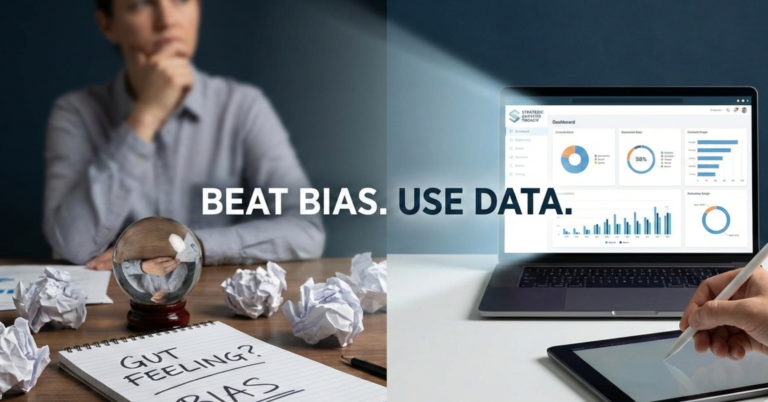
Analyst bias is the hidden tax that devalues research. Human analysts are prone to cognitive shortcuts that can lead to catastrophic strategic errors. The Strategic Analysis Toolkit uses several mechanisms to neutralize these biases.
Standardized Workflow Logic
By requiring analysts to follow a structured Four-Pillar Workflow, the toolkit prevents skipping critical steps, such as environmental scanning. This ensures that the internal strategy is always grounded in external reality, mitigating the Inside View bias, where teams are overly optimistic about their capabilities.
AI-Driven Objectivity
The generative AI assistant analyzes data without the emotional attachment human teams often have to their own ideas. It can perform Red Teaming, acting as an institutional dissenter to uncover flaws in a proposed plan, and conduct Strategic Pre-Mortems to identify why a plan might fail before it is implemented.
Detailed Framework Application: Discovery to Transformation
To understand the practical application of the 13 frameworks, one can follow the hypothetical organization AlphaTech through its lifecycle:
Stage 1: Seed and Foundation
AlphaTech begins by using PESTLE to identify a technological opportunity in decentralized finance. They use Porter’s Five Forces to find that while rivalry is high, buyer power is fragmented, suggesting an opening for a platform that aggregates services. Value Chain Analysis shows that their primary strength lies in Technology Development, but they have a weakness in Outbound Logistics (customer onboarding).
Stage 2: Strategic Scaling
As they enter the growth phase, AlphaTech conducts a SWOT analysis. They identify their proprietary algorithm as a Strength and fragmented buyer power as an Opportunity. Using GOST, they set a Goal to capture 10% of the market within two years. Their Strategy is to focus on the Product Development quadrant of the Ansoff Matrix, launching a suite of user-friendly mobile apps to address their onboarding weakness.
Stage 3: Maturity and Implementation
AlphaTech becomes a market leader but faces margin compression. They pivot to an enterprise model using the Blue Ocean Strategy, creating a new market for B2B decentralized finance. They use the TOWS Matrix to develop an SO Strategy: leveraging their established platform (Strength) to capture the enterprise market (Opportunity). The Balanced Scorecard is implemented to track not just revenue but also System Uptime and Customer Trust Scores.
Stage 4: Continuous Improvement
A new regulation is changing the landscape. AlphaTech uses the Kotter 8-Step Plan to transition the organization toward a Compliance-First culture. They use the PDCA Cycle to test new compliance features in small markets before a global rollout. The Executive Summary and What-If Scenarios allow the CEO to show the board that while the pivot will temporarily increase costs, it will secure the firm’s long-term viability and maintain a healthy LTV/CAC ratio.
Financial Modeling and Subscription Economics
The Strategic Analysis Toolkit is priced to be accessible while providing professional-grade value,
| Plan | Price | Annual Equivalent | Benefit |
| Monthly | $99 | $1,188 | Flexibility for short-term projects. |
| Annual | $82.50 / mo | $990 | 2 Months Free; Best for continuous intelligence. |
| Earlybird | $41.25 / mo | $495 | 50% Discount (Code: SAT50); Unbeatable ROI. |
For an organization, the cost of a single bad strategic decision can run into the millions. By providing a platform that mitigates bias and structures the planning process, the toolkit offers an ROI that is orders of magnitude higher than its subscription cost.
Conclusion: The Imperative of Strategic Agility
The analysis in this report shows that strategy is not a destination but a journey. The 13 frameworks in the Strategic Analysis Toolkit provide the compass, the map, and the vehicle for that journey. By shifting from static plans to a model of continuous strategic intelligence, organizations can navigate the complexities of their lifecycle with unprecedented precision. The democratization of these professional-grade methodologies ensures that any leader, in any sector, can build an organization that is not only resilient to change but also thrives on it. The time for gut-feeling strategy has passed; the era of structured, AI-driven, lifecycle-optimized intelligence is here.
Strategic agility is the final frontier of competitive advantage. Through the disciplined application of the 13 core frameworks, from the foundational PESTLE scan to the iterative refinement of the PDCA cycle, organizations can bridge the gap between where they are and where they intend to be. The Strategic Analysis Toolkit is the essential platform for this transformation, turning the art of strategy into a rigorous, repeatable, and highly successful science.