What is Cognitive Bias?
Cognitive bias in business decision-making occurs when subjective emotions or assumptions distort objective analysis. Common examples include confirmation bias and the sunk cost fallacy. This page explains how structured, data-driven frameworks can reduce bias and improve strategic outcomes.
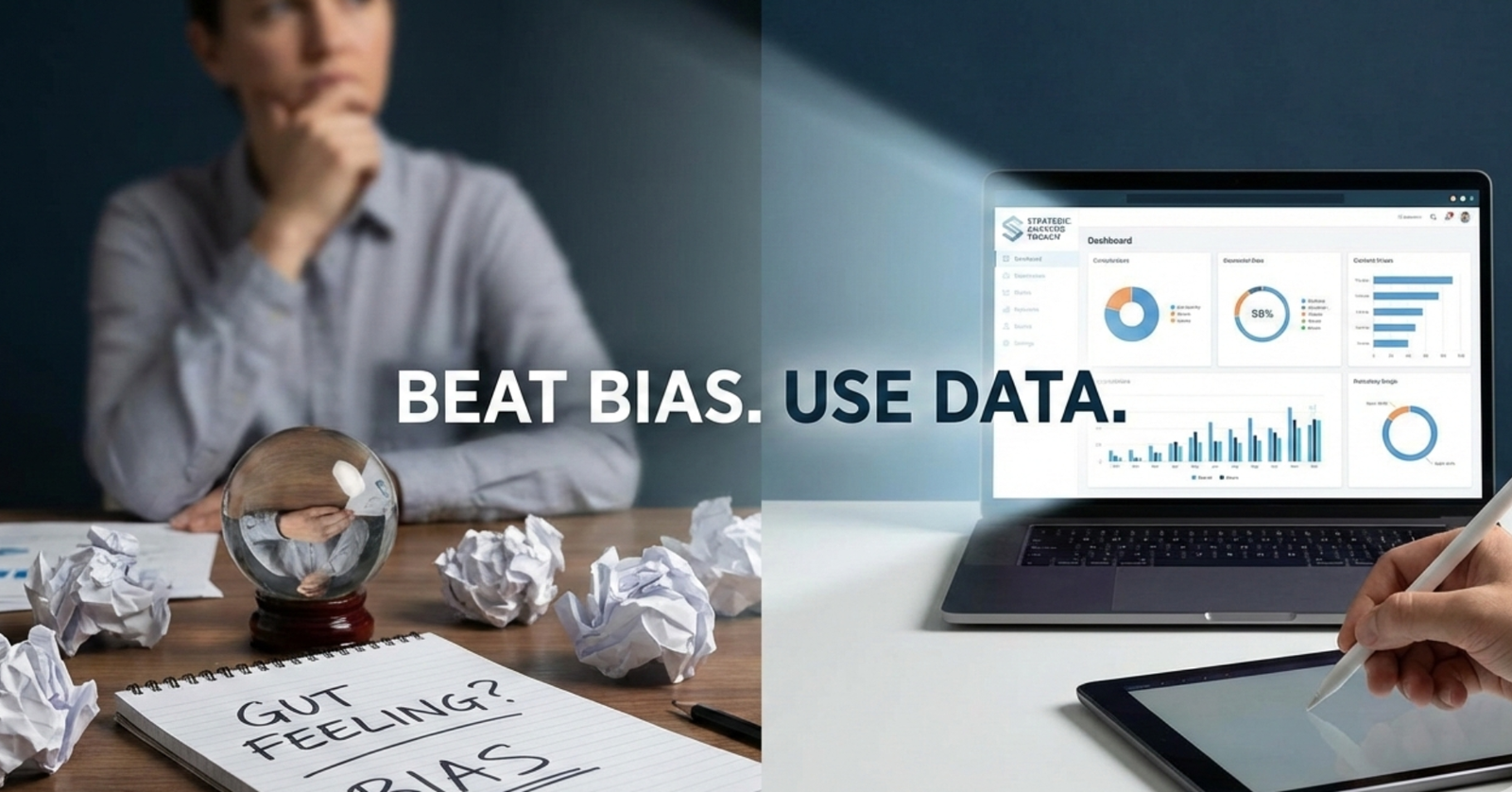
Most people pride themselves on their gut feeling. We call it intuition, but in the cold light of the boardroom, intuition is often just a collection of unexamined biases.
In a fast-moving market, relying on a hunch isn’t just risky, it’s expensive. To lead with confidence, you must transition from subjective opinions to objective, data-driven analysis.
What Are the Most Common Cognitive Biases That Damage Business ROI?
Cognitive biases are the silent killers of profitability. Two of the most common culprits are:
- Confirmation Bias: We subconsciously look for data that supports our existing plan and ignore the red flags that suggest we’re wrong
- Sunk Cost Fallacy: We continue pouring resources into a failing project simply because we’ve already invested so much
When these biases go unchecked, they lead to strategic drift, where your company moves further away from market reality and closer to a costly mistake.
How Do You Turn Data into an Objective Business Strategy?
Objectivity isn’t about eliminating human judgment; it’s about providing judgment with better fuel. To beat bias, you need a structured Objective Stack:
- Define Success Early: Set KPIs before you start a project to prevent moving the goalposts later
- Standardize Your Frameworks: Whether you are performing a SWOT, PESTLE, or Porter’s Five Forces analysis, using a consistent structure ensures you are comparing apples to apples
- The Power of External Benchmarks: Internal data can be a bubble. Contrast your performance against external market realities to find the truth
How Can Business Leaders Stop Guessing and Start Making Evidence-Based Decisions?
The challenge for most leaders isn’t a lack of data; it’s the lack of a system to analyze it objectively. Building these frameworks from scratch takes time that most busy consultant and executives don’t have.
This is where the Strategic Analysis Toolkit becomes your secret weapon.
Instead of staring at a blank piece of paper and letting bias creep into your margins, our toolkit provides you with professional-grade, automated templates designed to force objectivity. From comprehensive TOWS matrices to advanced What-if analysis, the Strategic Analysis Toolkit provides the structure you need to see your business as it truly is, not just as you hope it to be.
How Does Removing Bias Give Your Business a Competitive Edge?
In the era of AI and rapid disruption, the companies that win are those that can strip away emotion and act on evidence. Objectivity is the ultimate competitive advantage.
Don’t let a gut feeling derail your next quarter. Use a proven system to validate your strategy and ensure every move you make is backed by rigorous, objective analysis.
Ready to De-bias Your Business Decision-Making?
Use the frameworks preferred by top-tier consultants. Visit Strategic Analysis Toolkit today and start making decisions that are driven by data, not doubt.