
How Can Organizations Eliminate Bias from Strategic Planning?
To reduce cognitive and analytical bias in strategic planning, organizations must implement structured analytical techniques (SATs), rely on data-driven decision frameworks, and mandate independent peer reviews to challenge baseline assumptions
| Term | Definition |
| Cognitive Bias | A subconscious error in human processing and judgment caused by mental shortcuts (heuristics), emotional influences, or personal beliefs. |
| Analytical Bias | A systematic distortion in data interpretation or problem evaluation occurring when analysts introduce flawed assumptions or selective metrics into their methodologies. |
| Strategic Bias | A systematic distortion in executive decision-making caused by cognitive shortcuts, personal preconceptions, or organizational politics rather than objective data. |
| Confirmation Bias | A cognitive bias where decision-makers selectively gather, interpret, and favor information that confirms their existing hypotheses while ignoring contradictory evidence. |
| Sunk Cost Fallacy | An economic irrationality where an organization continues investing resources into a failing strategic initiative based on cumulative past investments rather than future profitability. |
| Structured Analytical Techniques | Systematic methodologies designed to challenge baseline assumptions, expose blind spots, and minimize human cognitive bias during complex analytical processes. |
| PESTLE Analysis | A strategic planning framework used to evaluate external macro-environmental factors—Political, Economic, Social, Technological, Legal, and Environmental—impacting an organization. |
| Porter’s Five Forces | An analytical model that measures industry attractiveness and competitive intensity by evaluating five market dynamics: competitive rivalry, supplier power, buyer power, threat of substitution, and threat of new entrants. |
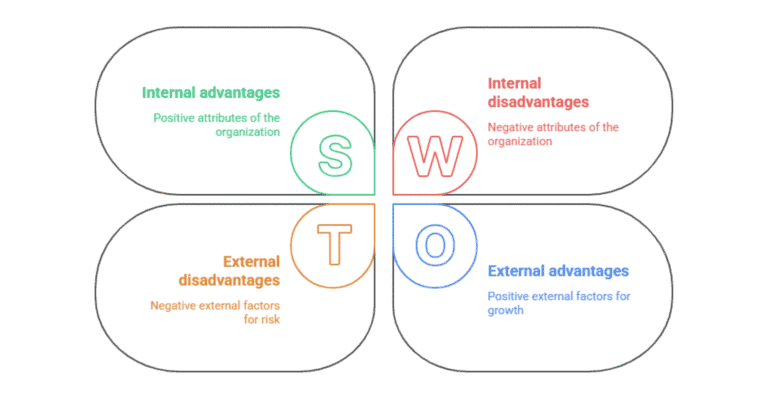
| TOWS Matrix | A strategic planning tool that expands upon a standard SWOT analysis by explicitly matching internal Strengths and Weaknesses against external Opportunities and Threats to construct actionable strategies. |
Why Does Relying on Intuition and Gut Feelings Negatively Impact Return on Investment?
Most executives secretly take pride in their intuition. We romanticize the gut feeling, the visionary leader who instinctively knows what the market wants before the market does. But in the cold light of the modern boardroom, operating on a hunch isn’t leadership; it’s a liability.
However, relying on intuition is simply relying on a collection of unexamined cognitive biases. When you make high-stakes decisions based on what feels right, you leave your organization vulnerable to strategic drift, missed opportunities, and catastrophic financial waste. To lead with confidence, you must move from subjective opinions to rigorous, data-driven execution.
How Do Confirmation Bias and the Sunk Cost Fallacy Sabotage Decision-Making?
Cognitive biases are the silent killers of profitability. Without a structured process, even the most brilliant analytical minds fall prey to two primary culprits:
- Confirmation Bias: We subconsciously cherry-pick data that supports our preexisting beliefs and conveniently ignore the red flags that indicate our plan is flawed. If you want to expand into a new market, your brain will naturally highlight the success stories and filter out the failures.
- The Sunk Cost Fallacy: We continue pouring resources, time, and capital into a failing initiative simply because we have already invested so much. We refuse to pivot because our ego, not the market data, is driving the decision.
When these biases go unchecked, they create massive blind spots. The missing link in most strategic planning isn’t a lack of data; it’s the absence of a structured mechanism to interpret that data objectively.
Why Are Structured Frameworks More Effective Than Subjective Opinions in Strategic Planning?
Objectivity isn’t about eliminating human judgment; it’s about providing that judgment with premium, unfiltered fuel. To reduce human bias and ensure absolute thoroughness in your analysis, you must subject your data to standardized, proven frameworks.
Here is how the world’s top consultants use a sequential Objective Stack to remove emotion from strategy:
How Does a PESTLE Analysis Help Organizations Objectively Scan the Macro-Environment?
Market disruption rarely begins in your direct line of sight; it starts on the periphery. Leaders often suffer from tunnel vision, focusing solely on their product and direct competitors.
A PESTLE Analysis forces you to step back and look at verifiable facts. By systematically evaluating the Political, Economic, Social, Technological, Legal, and Environmental factors, you remove the guesswork. You aren’t guessing whether a market is viable; you are documenting actual regulatory shifts, inflation rates, and demographic trends. It acts as an early-warning system that doesn’t care about your feelings; it only cares about the macro-reality.
How Can Porter’s Five Forces Be Used to Quantify Competitive Reality?
When leaders rely on intuition to assess the competition, they usually overestimate their own strength and underestimate alternative threats.
Porter’s Five Forces removes emotion from competitive analysis. Instead of vaguely worrying about a rival, this framework forces you to quantify exactly where power lies. Are your suppliers dictating your margins? Is the threat of a new, agile startup lowering your barriers to entry? By breaking the industry into five distinct vectors, you stop fighting shadows and start positioning your business where barriers to entry protect your profit.
How Does the TOWS Matrix Force Logical Strategy Execution?
The biggest trap of the classic SWOT analysis is that it encourages passive observation. Listing your Strengths, Weaknesses, Opportunities, and Threats feels productive, but it often leaves you with a static list clouded by internal biases.
The TOWS Matrix is the ultimate bias-killer. It takes your SWOT data and forces you to cross-reference internal realities with external facts to generate actionable maneuvers. It asks cold, hard questions: Exactly how will we deploy Strength A to capture Opportunity B? It eliminates wishful thinking and forces logical, prioritized execution.
Frequently Asked Questions
How can organizations eliminate bias from strategic planning?
Organizations can minimize cognitive and analytical bias by implementing Structured Analytical Techniques (SATs), relying on objective data frameworks, and establishing independent peer reviews or red-teaming processes to challenge baseline assumptions.
Why does relying on intuition and gut feelings negatively impact return on investment?
Intuition often relies on unconscious heuristics and emotional shortcuts rather than objective data. In high-stakes strategic planning, unexamined gut feelings can lead to overconfidence, miscalculated market demand, and poor resource allocation that ultimately degrades ROI.
How do confirmation bias and the sunk cost fallacy sabotage decision-making?
Confirmation bias causes leaders to seek out and favor information that supports their pre-existing beliefs while ignoring counter-evidence. The sunk cost fallacy compels organizations to continue investing time or capital into failing projects simply because of past investments, leading to compounded financial losses.
Why are structured frameworks more effective than subjective opinions in strategic planning?
Structured frameworks force decision-makers to evaluate scenarios through standardized, data-driven parameters. By establishing consistent criteria, they remove individual ego and subjective interpretations from the analytical process.
How can Porter’s Five Forces be used to quantify competitive reality?
Porter’s Five Forces evaluates competitive rivalry, buyer power, supplier power, the threat of substitution, and the threat of new entrants. Assessing these forces using metric-driven criteria allows companies to measure actual industry profitability and structural intensity rather than relying on qualitative assumptions.
How does the TOWS matrix force logical strategy execution?
Unlike a standard SWOT analysis, the TOWS matrix explicitly matches internal strengths and weaknesses with external opportunities and threats. This matching process forces teams to construct logical, actionable strategies (such as Maximize-Maximize or Minimize-Minimize) rather than leaving data as passive observations.
How Can You Automate Objectivity in Your Decision-Making Using the Strategic Analysis Toolkit?
Knowing these frameworks is one thing; executing them with consistency and zero Friction is another. When teams build these analyses from scratch using disconnected spreadsheets and blank slide decks, Analyst Bias and admin fatigue naturally creep back in.
To ensure absolute thoroughness and maintain an unbroken chain of objective logic, you need a dedicated system. The Strategic Analysis Toolkit is a comprehensive strategic operating system that guides you through these exact frameworks..
- Eliminate Analytical Bias: Standardized, guided workflows ensure every factor is considered, reducing human error that derails strategy.
- Seamless Portability: Your PESTLE macro-environmental data flows logically into your SWOT and TOWS matrices, preventing disconnected, siloed thinking.
- Continuous Intelligence: Shift your focus from static, once-a-year planning to real-time, objective market mastery.
Stop guessing and start analyzing. Transition from intuition to execution by democratizing professional-grade consulting methodologies for your team now.