
What is Real-Time Strategic Planning?
Real-time strategic planning is an agile management framework that continuously updates strategic analysis, market benchmarks, and risk scenarios using live external market data rather than static, periodic reports.
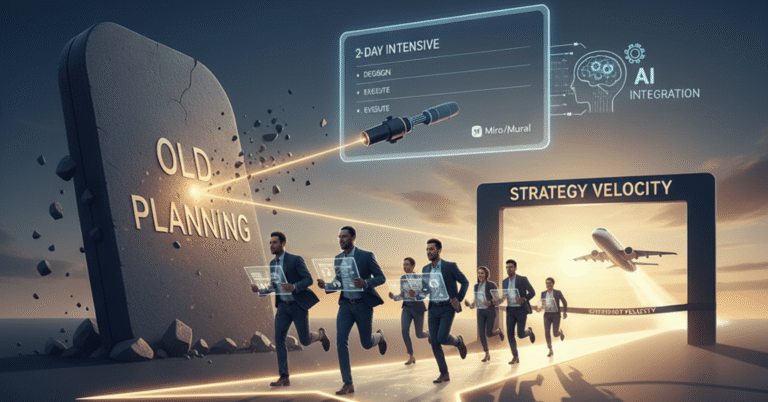
By the time a traditional 50-page strategic plan is printed, the market has already moved. A competitor has launched a new feature, a supply chain disruption has hit the news cycle, or a regulatory shift has emerged on social media.
For the modern executive, the challenge isn’t finding a framework; it’s uncovering the truth. Most strategic plans rely on lagging indicators, data that is months or even years old. To win in a volatile economy, you need a leading-indicator strategy.
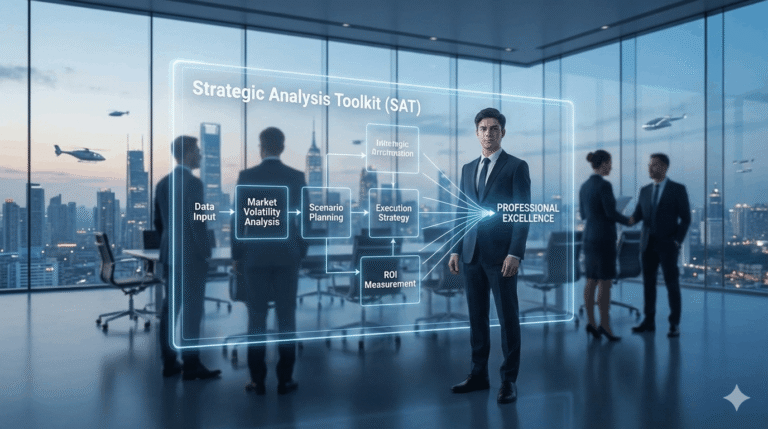
Enter the Strategic Analysis Toolkit. By combining world-class strategic frameworks with Real-Time Web Search, this tool ensures your strategy is grounded in verifiable, authoritative facts, not outdated assumptions.
How Does Real-Time Data Improve Strategic Discovery?
The first step in any successful pivot is Discovery and Foundation. Traditionally, conducting a PESTLE analysis or a Porter’s Five Forces report required weeks of manual research. Consultants would pore over static PDFs and industry journals.
With the Strategic Analysis Toolkit, the process is transformed. The tool pulls verifiable data from authoritative sources across the web in real time. Whether you are analyzing political shifts or the bargaining power of suppliers, you see the world as it exists today. This is paired with internal Value Chain Analysis, allowing you to see exactly where your organization creates value and where it leaks it, against a backdrop of current market conditions.
Which Frameworks Support Dynamic Strategic Analysis?
Strategic Analysis is where many businesses get stuck in analysis paralysis. You know the SWOT Analysis (Strengths, Weaknesses, Opportunities, Threats), but how do you know if a threat is still relevant?
By utilizing the GOST (Goals, Objectives, Strategy, Tactics) framework within the toolkit, you can align your entire team under a unified vision powered by live data. Are you looking for growth? The Ansoff Matrix helps you decide between market penetration and diversification, while the Blue Ocean Strategy tool allows you to identify uncontested market space by scanning current competitor movements in real-time. You aren’t just guessing where the blue ocean is; you’re using data to map the shoreline.
How Do You Bridge the Strategic Execution Gap With Live KPIs?
A strategy is only as good as its implementation. This is where most consultants leave you with a thick binder and a good luck handshake. The Strategic Analysis Toolkit stays with you through Implementation Planning.
The TOWS Matrix takes your SWOT results and generates actual strategies to capitalize on opportunities and defend against threats. With TOWS Prioritisation, the toolkit helps you rank these actions based on real-world urgency. Finally, by integrating the Balanced Scorecard, you transform abstract goals into measurable KPIs. Because the tool is powered by real-time search, your benchmarks stay relevant even if the industry standard shifts mid-quarter.
How Can Leadership Manage Change in a Dynamic Market?
Strategy isn’t a one-time event; it’s a cycle of continuous improvement. Organizations that survive are those that can manage change without breaking.
The toolkit integrates Kotter’s 8-Step Plan for Change, providing a roadmap for leadership to mobilize the workforce. This is supported by the PDCA (Plan-Do-Check-Act) Cycle, ensuring that as you implement your strategy, you are constantly checking the results against the latest market data.
Perhaps the most powerful features for the modern CFO and CEO are the Executive Summary and What-if Scenarios. What if interest rates rise? What if a new competitor enters the European market? The toolkit lets you run these scenarios against live data, giving you a crystal ball powered by logic and real-time evidence.
Why Is Real-Time Strategic Planning Superior to Traditional Planning?
| Feature / Dimension | Traditional Strategic Planning | Real-Time Strategic Planning |
| Review Cadence | Annual or periodic reviews | Continuous, dynamic updates |
| Document Format | Static PDFs, decks, and printed binders | Interactive, living dashboards |
| Data Performance Metrics | Lagging indicators (historical metrics) | Leading indicators (live market signals) |
| Data Collection Method | Manual research and delayed surveys | Automated web intelligence and real-time search |
| Market Responsiveness | Slow to react to competitive pivots | Immediate adaptation to market shifts |
| Strategic Execution | Rigid, set-and-forget annual goals | Agile execution with flexible, live KPIs |
The secret sauce of the Strategic Analysis Toolkit isn’t just the frameworks; it’s the Real-Time Web Search.
Standard AI tools often rely on training data that is months old. The Strategic Analysis Toolkit is different. It pulls from the live web, ensuring that when you request a competitive analysis or a regulatory check, you receive the most recent, verifiable information. It eliminates the hallucination risk of standard AI by grounding every strategic recommendation in authoritative, cited facts.
How Can Businesses Get Started With Real-Time Strategic Intelligence?
The difference between a market leader and a casualty is the quality of their information. Don’t build your company’s future on a foundation of assumptions.
Whether you are a startup founder seeking your Blue Ocean or a corporate executive navigating a complex Value Chain, the Strategic Analysis Toolkit offers the professional-grade frameworks and real-time intelligence you need to lead with total confidence.
Start Building Your Real-Time Strategy at StrategicAnalysisToolkit.com today.