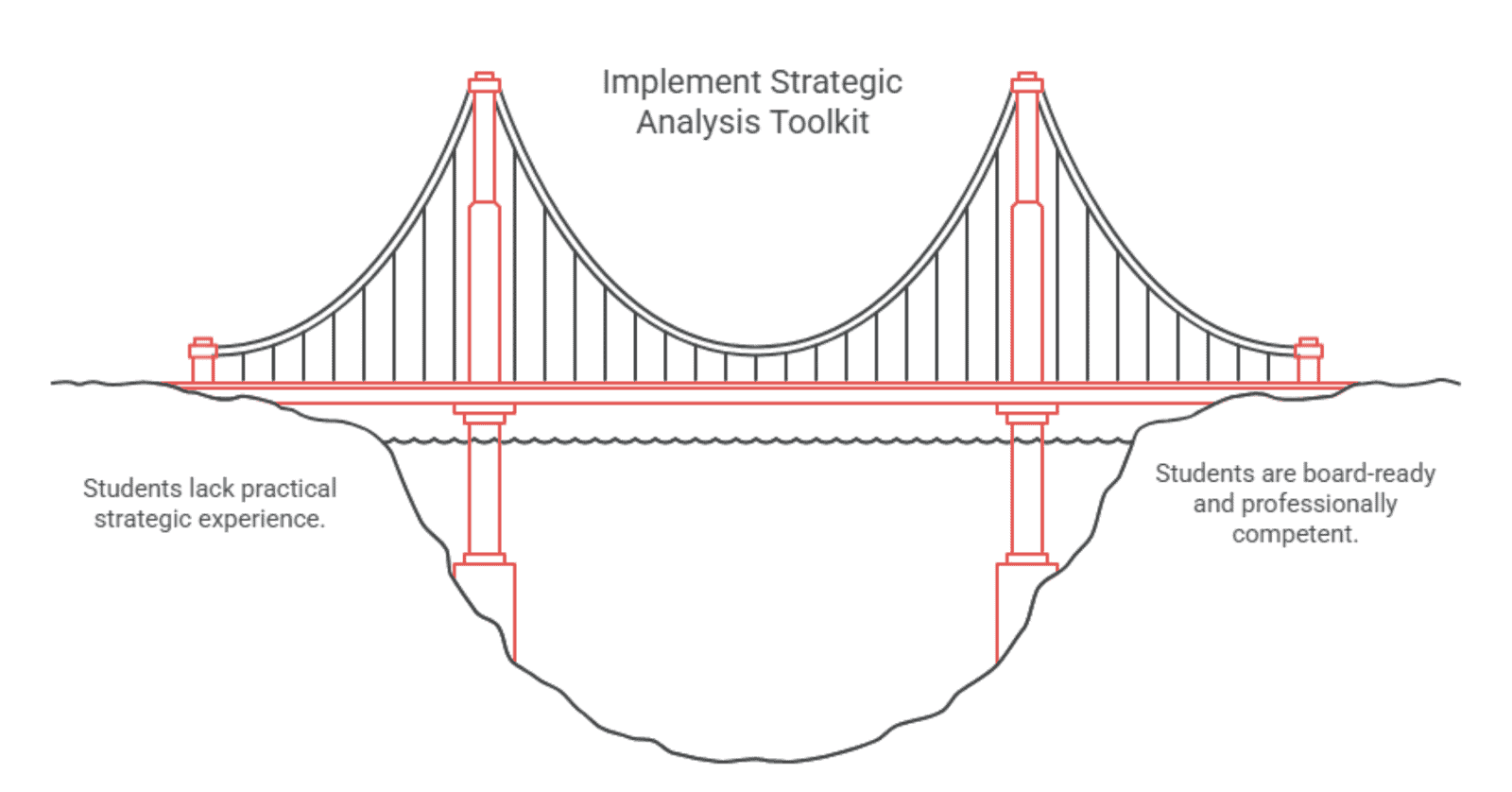
The chasm between academic theory and professional application has never been more apparent. For decades, business schools have relied on static case studies and theoretical textbooks to teach strategy. While these tools are foundational, they often fail to capture the dynamic, messy, and data-intensive reality of actual corporate strategy. Students frequently graduate with a head full of frameworks but a lack of practical experience in connecting the dots to form a cohesive strategic narrative.
This disconnect presents a significant challenge for educators, institutions, and students alike. How do we move beyond rote memorization of the SWOT analysis to a sophisticated, integrated understanding of market dynamics?
Enter the Strategic Analysis Toolkit.
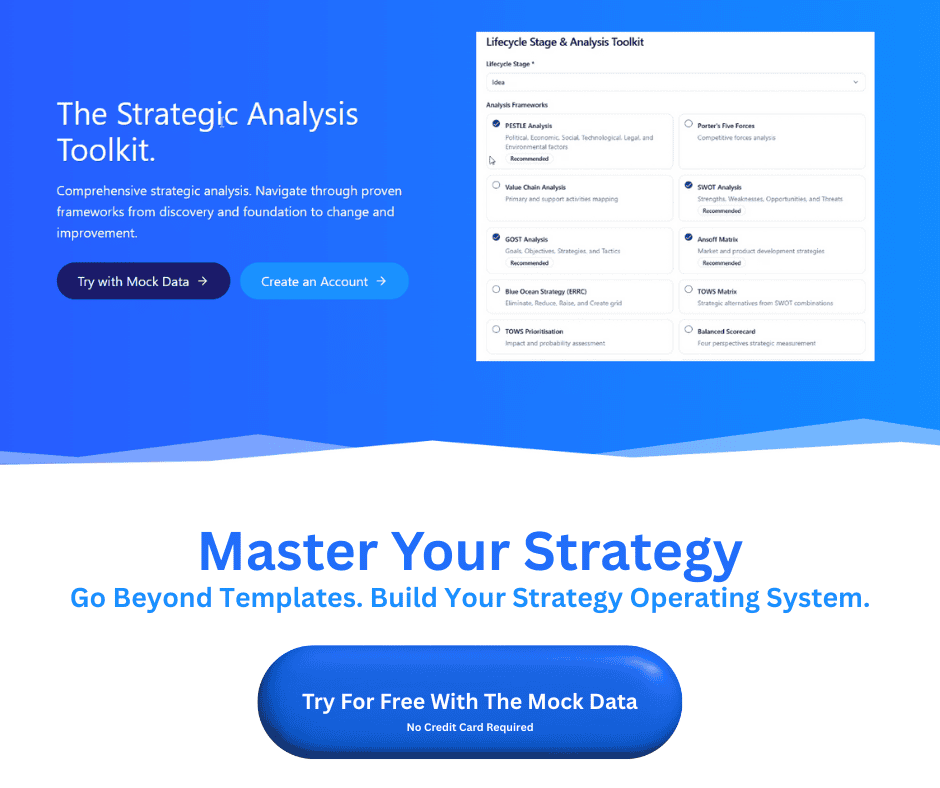
This platform is not merely a software solution; it is a pedagogical breakthrough that democratises access to high-quality strategic consulting methodologies. By integrating insights with a sequential, logical framework, the Toolkit bridges the gap between the classroom and the boardroom. Whether you are a program director looking to modernize your MBA curriculum, a professor seeking to standardize grading, or a student aiming to land a top-tier consulting role, the Strategic Analysis Toolkit is the essential bridge to professional mastery.
Transforming Business Education: A New Era for Institutions and Faculty
For business schools and educational institutions, staying relevant means equipping students with tools that mirror the real world. The Strategic Analysis Toolkit supports this mission by offering a structured environment that enhances curriculum design and empowers faculty.
MBA Strategy Courses: Moving Beyond Static Theory
The cornerstone of any MBA program is the Strategy Course. Traditionally, these courses rely on “frozen in time” case studies, examining a company’s situation from five or ten years ago. While valuable for historical context, this approach often fails to engage students who are witnessing real-time market disruptions, such as the rise of generative AI or global supply chain shifts.
The Strategic Analysis Toolkit allows professors to bring the real world into the classroom. Instead of analyzing a static case, students can be tasked with performing a live strategic review of a current Fortune 500 company or a local SME.
- The Benefit: The platform forces students to move beyond isolated exercises. They don’t just do a PESTLE analysis and forget it. They must use the output of that PESTLE analysis to inform their Porter’s Five Forces model, which in turn influences their Blue Ocean Strategy.
- Practical Application: This sequential integration teaches the connective tissue of strategy,how a regulatory change (Political factor) impacts barrier to entry (Porter’s Five Forces) and necessitates a pivot (Strategic Option).
Rapid Case Study Development
One of the hidden burdens on faculty is the immense time required to develop fresh, high-quality teaching materials. Creating a robust case study with accompanying financial data and market analysis can take weeks.
With the Toolkit, faculty can leverage its capabilities to generate comprehensive strategic baselines in minutes. A professor can generate a full strategic profile for a trending company, complete with Ansoff Matrices and competitive landscape assessments, and use this as the foundation for a class discussion or a fix this strategy assignment. This capability dramatically reduces preparation time, allowing faculty to focus on what they do best: teaching critical thinking and guiding nuanced discussions.
Accelerating Executive Education
Executive Education participants demand immediate ROI. These are senior leaders who don’t have patience for abstract theory; they need actionable methodologies they can apply to their organizations on Monday morning.
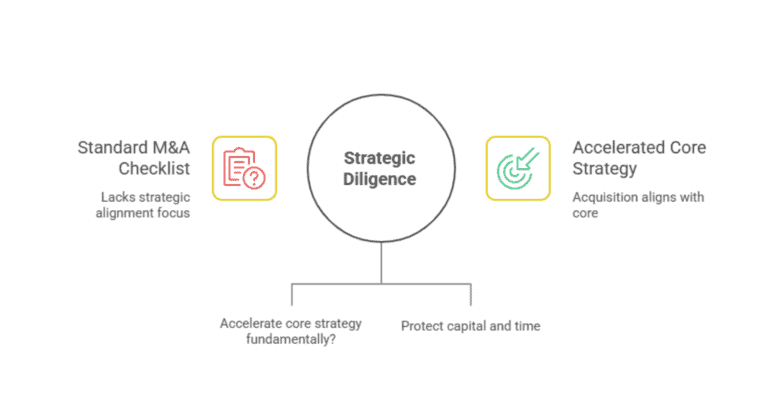
The Strategic Analysis Toolkit is uniquely suited for this high-stakes environment. It offers a professional-grade sandbox where executives can model complex strategic scenarios, such as M&A due diligence or market entry strategies, without risk. The structured workflow ensures that even seasoned executives don’t skip critical steps, reinforcing a disciplined approach to decision-making that is often lost in the day-to-day chaos of corporate management.
The Student Advantage: From Classroom to Boardroom
For students, the job market is more competitive than ever. Recruiters at top consulting firms and multinational corporations are looking for candidates who can hit the ground running. They want proof of strategic readiness.
Mastering the Learning by Doing Approach
The fear of the blank page is real for many business students tasked with a capstone project. Where do I start? Which framework applies here? How do I structure the data?
The Toolkit acts as a digital mentor, guiding students through the professional consulting workflow. It eliminates the paralysis of choice by providing a logical, sequential path.
- Guidance, Not Answers: Crucially, the tool facilitates the process of analysis. It handles the heavy lifting of data organization, allowing students to focus on the – So what?, the insights and recommendations that actually drive value.
- Board-Ready Deliverables: The output from the Toolkit isn’t a messy Word document; it is a professional, structured report. Students can generate comprehensive strategic analyses that look and feel like they came from a Tier-1 management consultancy. This ability to produce board-ready reports is a massive confidence booster and a tangible asset they can showcase in job interviews.
Academic Research and Capstone Projects
For graduate students and PhD candidates, consistency is key. When conducting research on strategic management trends across multiple industries, manually applying frameworks can introduce human error and inconsistency.
The Toolkit provides a standardized environment for research. By running multiple companies through the same rigorous analytical sequence, researchers can ensure apple-to-apples comparisons. This Quality Assurance feature minimizes bias and ensures that the data collection phase of research is robust, defensible, and thorough, prerequisites for publishable academic work.
Why the Toolkit Works: The Secret Sauce for Education
Why is this platform superior to simply using Excel and PowerPoint? The answer lies in its three core value propositions tailored for the educational sector.
Insights: Critical Thinking over Data Entry
In a traditional setting, a student might spend 80% of their time formatting slides and searching for basic data, leaving only 20% for actual thinking. The Strategic Analysis Toolkit flips this ratio. By automating the “Rapid Analysis” of gathering and structuring preliminary data, the platform frees up students to spend 80% of their time on interpretation.
- Educational Value: This shifts the learning objective from – Can you make a PESTLE chart? to Can you interpret this PESTLE chart to predict the next market crash?
Sequential Framework Integration
Most textbooks teach frameworks in isolation. Chapter 1 is SWOT; Chapter 2 is Porter’s. The Toolkit corrects this fragmentation through Sequential Framework Integration. It enforces a holistic view where the output of one analysis feeds into the next.
- The Logic Flow: Students learn that you cannot accurately assess competitive rivalry (Porter’s) without first understanding market growth rates (Product Lifecycle). This interconnected approach is the hallmark of advanced strategic thinking.
Consistency: The Key to Fair Grading
Subjectivity is the enemy of fair grading in business schools. One student writes a 50-page rambling paper; another writes a 5-page bulleted list. How do you compare them?
The Toolkit solves this by enforcing a standardized output format. All students navigate the same workflow and produce reports with the same structure. This allows professors to grade based on the quality of insight rather than the quality of formatting. It levels the playing field, ensuring that the best strategic mind wins, not just the best graphic designer.
Conclusion
The gap between business education and business practice is narrowing, but it requires the right tools to close it completely. The Strategic Analysis Toolkit is more than just software; it is a catalyst for academic and professional growth.
For institutions, it modernizes the curriculum and supports faculty. For students, it serves as a launchpad for their careers, transforming them from passive learners into active, board-ready strategists. By democratising access to these high-level methodologies, the Toolkit ensures that the next generation of business leaders is not just ready to take a test, but ready to lead.
Are you ready to transform your strategic management curriculum?
Don’t let your students graduate with outdated tools. Explore the Strategic Analysis Toolkit today and give your institution the competitive edge it deserves.