Think of your business as a high-stakes dinner party at a restaurant. The investors sit at the head of the table, asking about the bill; the employees are in the kitchen, wondering whether they’re getting a break; and the customers are at the door, expecting a five-star meal for a fast-food price.
In business strategy, this isn’t just a metaphor; it’s your daily reality. Stakeholder management is the art and science of balancing competing interests without the whole house coming down. But here’s the secret: successful consultants don’t rely on gut feelings to keep everyone happy. We use frameworks.
If you’re struggling to align your board, team, and market, you don’t need more meetings. You need the Strategic Analysis Toolkit. Here’s how to use world-class frameworks to turn stakeholder conflict into a competitive advantage.
Identify the Who and the Why
Before you can balance interests, you must know whose interests are actually on the line. Most leaders stop at a simple list. We go deeper.
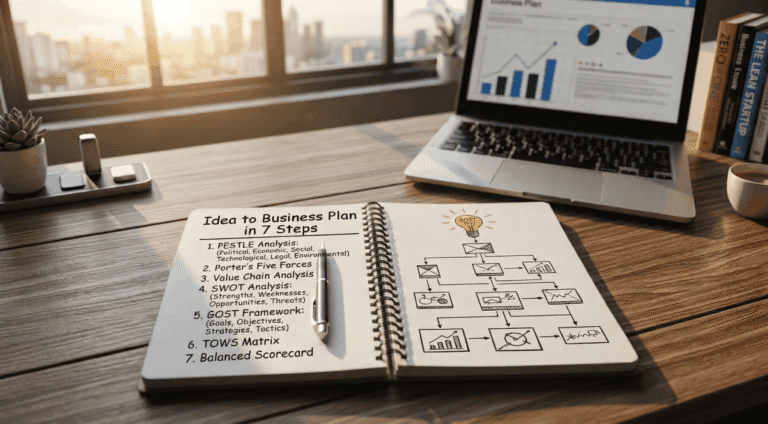
Using PESTLE Analysis in the Strategic Analysis Toolkit, you can map the macro-environmental forces. Is a new regulation (Political) worrying your legal team? Is a shift in consumer behavior (Social) threatening your sales?
Pair this with Porter’s Five Forces to quantify the power of your stakeholders. If your buyers have high bargaining power, their interests take priority in your value proposition. If your suppliers are consolidated, you need a strategy to keep them incentivized. By visualizing this, you stop guessing who matters and start knowing.
Connect the Internal Dots
Once you know who they are, you need to identify where they touch your business. This is where the Value Chain comes in.
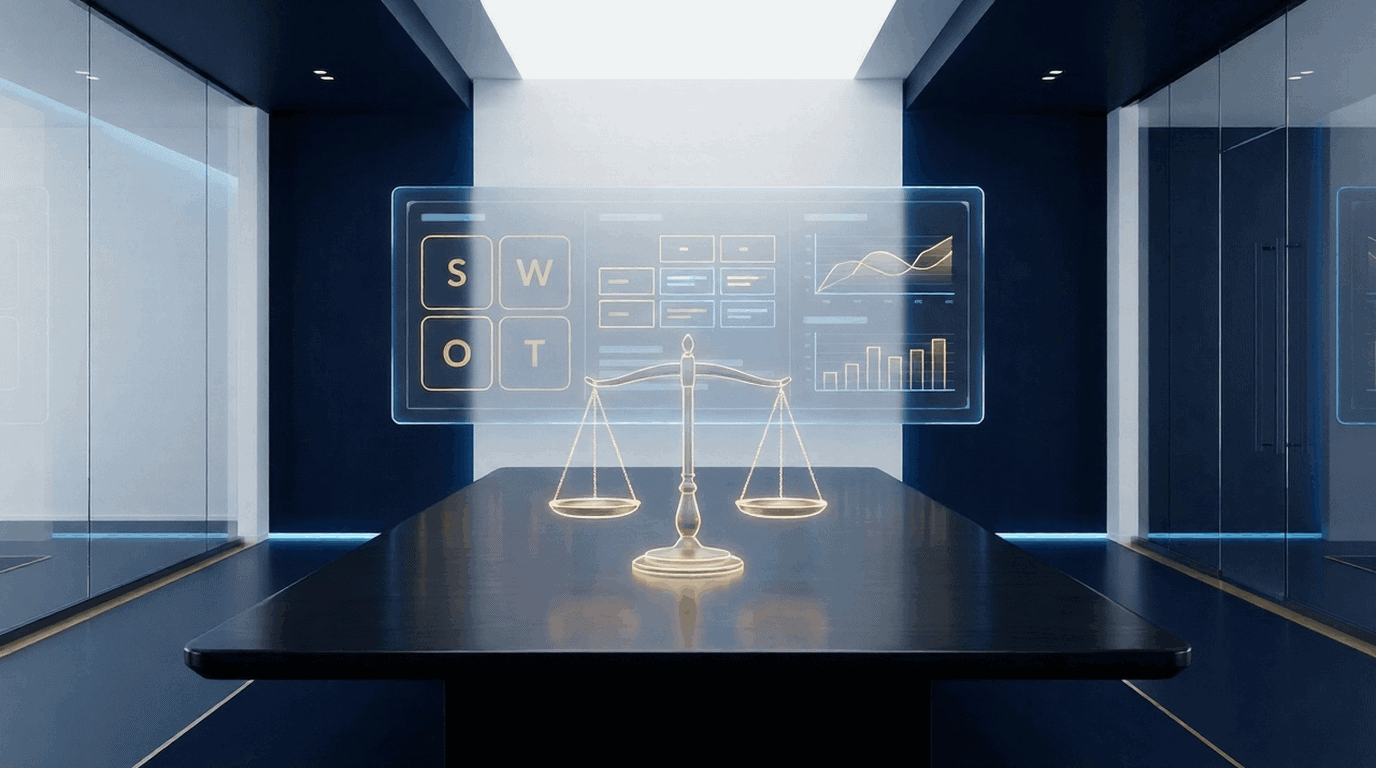
Every link in your chain, from inbound logistics to after-sales service, involves different stakeholders. The Strategic Analysis Toolkit helps you break down these activities and overlay your SWOT analysis.
- Is a stakeholder’s demand a threat to your current weakness?
- Can you leverage a strength to turn a stakeholder’s want into an opportunity?
Creating the Master Plan (GOST)
The biggest mistake in stakeholder management is setting vague goals. Stakeholders hate ambiguity.
The GOST Framework (Goals, Objectives, Strategies, Tactics) is your secret weapon for achieving transparency.
- Goal: What is the high-level win for the stakeholder?
- Objective: How will we measure it?
- Strategy: How will we balance it against other goals?
- Tactics: What are the specific moves?
When you present a GOST plan generated in the Toolkit, you aren’t just giving an update; you’re showing a roadmap that accounts for everyone at the table.
Turning Conflict into Strategy (TOWS)
Sometimes, stakeholder interests clash. The board wants cost-cutting; the staff wants a new R&D budget.
Don’t panic. Use the TOWS Matrix. TOWS takes your SWOT data and forces you to create actionable pairs.
- Strength-Threat (ST): How can we leverage our strong culture to mitigate the threat of a talent war?
- Weakness-Opportunity (WO): How can we leverage the opportunity of a new market to address our outdated tech stack?
By using TOWS Prioritization, you can mathematically rank which strategies will provide the most balance for the most stakeholders. It’s hard for a stakeholder to argue with data-driven logic.
The Ultimate Balancing Act: The Balanced Scorecard
If you want to keep the peace long term, you need the Balanced Scorecard. It is the gold standard for stakeholder management. It forces you to view your business through four lenses:
- Financial: What do our shareholders see?
- Customer: How do our users perceive us?
- Internal Processes: What must we excel at for our employees and operations?
- Learning and Growth: How do we sustain the future?
The Strategic Analysis Toolkit makes it easy to populate this scorecard, ensuring that no single stakeholder (such as the greedy investor) inadvertently starves the others (such as innovation-hungry employees).
Making the Change Stick
Even the best plan will fail if people aren’t on board. This is the human element of stakeholder management.
We use Kotter’s 8-Step Plan for Leading Change.
- Create Urgency: Why must we balance these interests now?
- Build a Guiding Coalition: Who are the key stakeholders who will champion this effort??
- Generate Short-Term Wins: How do we show everyone that the balance is working?
Once the change begins, the PDCA (Plan-Do-Check-Act) cycle ensures the balance doesn’t tip back into chaos. You plan the balance, do the work, check stakeholder feedback, and act on the results.
Stop Managing, Start Strategizing
Stakeholder management doesn’t have to be a headache of endless emails and firefighting. It’s about having the right tools to visualize the problem and the right frameworks to solve it.
The Strategic Analysis Toolkit integrates PESTLE, SWOT, TOWS, the Balanced Scorecard, and more into a seamless workflow. It transforms you from a manager into a master strategist.
Ready to bring balance to your business? Explore the Strategic Analysis Toolkit now.