Why Transformation Fails (and How Data Saves It)
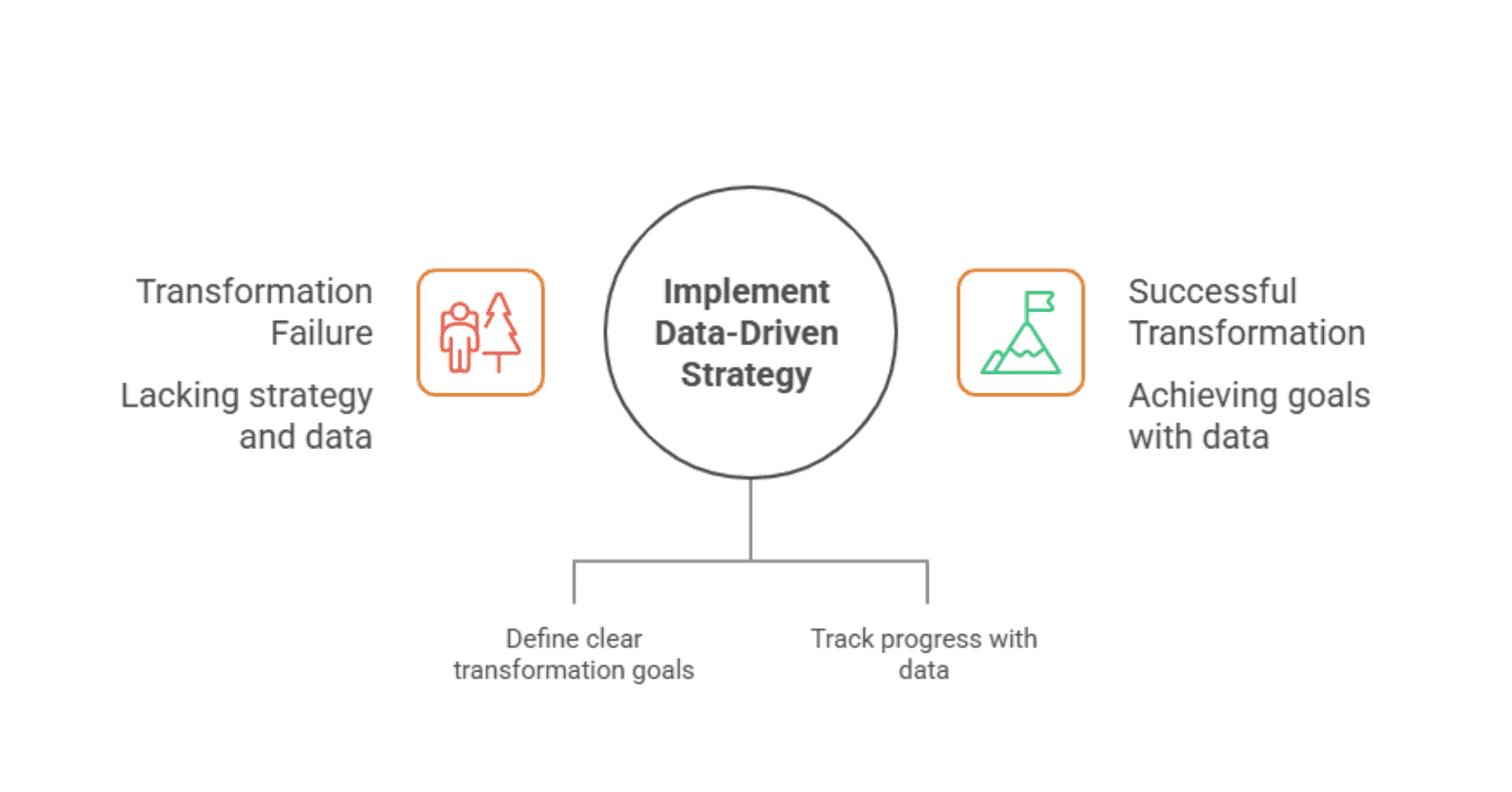
Digital and business transformation are now constant states, not temporary projects. Yet studies consistently show that 70% of these ambitious initiatives fail. Why? It’s rarely a failure of technology; it’s usually a breakdown in strategic direction and, critically, a lack of measurable, objective data guiding the process.
Transformation, at its core, is not about “digitization.” It is a fundamental, holistic shift in your operating model, customer value proposition, organizational culture, and technology landscape. It requires the entire organization to move from one stable state to a different, more competitive one.
The core argument is simple: Successful transformation is achieved by coupling a robust, strategic roadmap with a continuous, data-driven feedback loop. Without a strategy, you wander; without data, you can’t see if you’re moving forward or just spending money.
This guide outlines the four essential phases every leader must master to ensure their transformation not only launches but sustains success.
Phase 1: Strategic Clarity – Defining the Destination
Before investing a single dollar in technology or reorganizing a department, you must define the “Why” and the “Where.” This phase establishes the unshakeable foundation for all subsequent work.
Identify the Burning Platform: The Non-Negotiable Need for Change
Transformation is hard. To secure the necessary executive buy-in and organizational endurance, you must articulate the specific, tangible threat or opportunity that makes the status quo untenable.
Ask yourself: What is the risk of inaction? Is it declining market share due to agile competitors? Are high operational costs eroding profitability? Is it a customer experience so fractured that churn is inevitable? This urgent need, the “Burning Platform,” provides the emotional and financial rationale that fuels the entire initiative.
Vision Alignment: Defining the Future State
Your vision must be more than aspirational; it must be audacious but specific. It needs to provide a clear, compelling picture of the organization after the transformation.
Consultant Tip: The “Three-Year Headline” Test. Imagine your transformation succeeds. What is the main business headline the financial press will run in three years? “[Your Company Name] Slashes Cost-to-Serve by 40% Through AI-Driven Automation” is a far better headline than “Company Completes Digital Transformation.”
Strategic Pillars: Breaking Down the Vision
The high-level vision must be translated into 3–5 core Strategic Pillars that dictate resource allocation. These pillars are the high-level goals that link every project to the overall vision. Common examples include:
- Customer Experience Enhancement: Achieving a top-2 NPS score in your industry.
- Operational Efficiency: Eliminating $X million in waste through automation.
- New Revenue Streams: Launching three new digital product lines.
The First Data Point: Baseline Metrics (The “Where Are We Now?”)
This is the most crucial data step. You cannot measure success unless you know your starting line. Establish quantitative, objective Baseline Metrics for each of your strategic pillars.
- Customer Service Baseline: Current CSAT score or Net Promoter Score (NPS).
- Operational Baseline: Average Cost-to-Serve a customer, or end-to-end cycle time for a critical process.
- Financial Baseline: Current Total Cost of Ownership (TCO) of legacy systems.
These initial metrics provide the essential control group against which all future progress will be measured.
Phase 2: Architecting the Change – The Transformation Roadmap
With the destination defined, the next phase focuses on the detailed blueprint for getting there. This is where high-level strategy meets operational reality.
Operating Model Design
A transformation is a change in operating model. You must redesign how you work. This involves three key dimensions:
- Process Re-engineering: Eliminating redundant steps and automating manual work based on the new strategic goals.
- Organizational Structure: Aligning teams, roles, and accountabilities to the new processes, e.g., shifting from siloed departments to cross-functional “product teams”.
- Governance: Establishing the decision-making bodies and funding mechanisms that will sustain the change.
Prioritization with Impact
Not all initiatives are created equal. Use a data-informed approach, not wishful thinking, to prioritize. Focus on initiatives that offer the highest strategic value and the fastest time-to-value.
Categorize projects into:
- Quick Wins (High Value, Low Effort): Build momentum and show early success to secure ongoing funding and confidence.
- Game Changers (High Value, High Effort): These are the core projects requiring long-term investment.
- Drainers (Low Value): Cut or defer projects that consume resources without significant strategic impact.
Technology as an Enabler, Not a Driver
Technology is the fuel, but strategy is the engine. A common failure mode is adopting the latest trendy technology, e.g., a new CRM, AI platform, etc., without first defining the business problem it solves. Emphasize that tech choices must always follow the strategic goals, not the other way around. The roadmap outlines the operational need, and the technology is selected to meet it.
Data Governance and Infrastructure
If the entire transformation relies on data, the data itself must be trustworthy. This phase requires an early commitment to building a reliable, centralized data infrastructure (a single source of truth) and defining strong data governance rules. Poor data quality will impede your ability to measure success in Phase 3.
Phase 3: Execution and Agility – The Data Feedback Loop
A strategy is useless without disciplined execution. This phase ensures the execution is flexible, measurable, and steered by objective data; the heart of the data-driven approach.
A. Define Key Performance Indicators (KPIs) and Objectives and Key Results (OKRs)
Every single initiative must be tied to a measurable metric.
- Leading Indicators: These metrics predict future success and allow you to course-correct in real-time. Examples: Employee training completion rate, prototype testing engagement, or feature adoption rate among early users.
- Lagging Indicators: These measure the outcomes and confirm strategic achievement. Examples: Actual YoY revenue increase, Net Promoter Score (NPS) change, or total reduction in operational overhead.
The transformation is succeeding when the leading indicators are trending positively, signaling that the ultimate lagging indicators will follow.
Establish the Cadence of Truth
Transformation requires a new operating rhythm. Set up regular Transformation Review meetings (weekly or bi-weekly). These meetings must focus on data and outcomes, not on activity reports.
Rule: No PowerPoint updates on what teams did. Focus exclusively on the performance of the KPIs and OKRs: Are the numbers moving? If not, why, and what is the surgical intervention needed?
Fail Fast, Learn Faster (The Agile Mindset)
Transformation is a journey of continuous experimentation. Data removes the emotion from difficult decisions. If the metrics show an initiative is not delivering the expected impact, i.e., the leading indicators are flatlining, you must be prepared to:
- Pivot: Change the approach or scope.
- Stop: End the initiative if it’s proven unsustainable.
- Re-scope: Reduce the ambition to deliver value faster.
In modern transformation, success lies in adapting to data rather than mindlessly sticking to the original plan.
Culture and Communication through Data Transparency
Data is your greatest cultural weapon. Use transparent dashboards, communicated across the organization, to:
- Communicate Progress: Show how the hard work is paying off, e.g., “Since implementing X, Customer Resolution Time is down 15%!”
- Celebrate Wins: Highlight teams that successfully move their associated metrics.
- Explain Decisions: Show stakeholders and employees why a particular initiative was cut or pivoted, because the data demanded it. Transparency builds trust and accelerates adoption.
Phase 4: Sustaining Momentum and Institutionalizing Change
The most significant risk to any transformation occurs right after the initial launch: the dreaded “implementation dip” and reversion to old habits. This final phase ensures the change becomes the new normal.
Embed Transformation Metrics into Business-as-Usual
Transformation is complete only when the metrics defining the change become the standard metrics used to run the business every day. Ensure your new KPIs transition from a temporary “transformation project list” to the permanent departmental reporting and incentive structures. This integration signals that the new way of working is permanently institutionalized.
Shift from Projects to Products
Traditional projects have start and end dates. Modern digital capabilities, such as your new customer portal or automated supply chain, should be treated as ongoing products. These products evolve based on user feedback and new customer data, rather than being deemed “finished” and immediately becoming legacy systems. This mindset shift ensures continuous improvement.
Talent and Skills Development
Use performance and outcome data to identify systemic knowledge and skills gaps. If customer-facing metrics are underperforming, analyze whether it’s a process issue or a training deficit. Continuous transformation demands continuous upskilling and a proactive strategy for sourcing new, specialized talent, e.g., data scientists, AI engineers, etc.
The Next Iteration
Transformation is not a finish line; it’s an ongoing cycle of evolution. Once the current strategic vision is achieved and institutionalized, the outcome data from this cycle is used to set the baseline and vision for the next wave of change. By having real data on the realized benefits, you can invest and define the scope of the next strategic leap.
Conclusion
Successful business transformation requires a rare combination of inspirational, high-level strategy and the unblinking, objective truth provided by quantitative data. Leaders who try to execute sweeping change without rigorous measurement are flying blind, doomed to repeat the failures that plague the 70%.
The path to success is disciplined: Define your destination with clarity, architect the change with impact, execute with agile feedback loops, and institutionalize the new model with purpose. Stop planning the change; start measuring the change. Commit to this disciplined, data-first approach today and audit your current strategy to ensure it’s built on measurable truth.