The transition from business student to professional strategist is often described as a baptism by fire. In the classroom, you have the luxury of time and hypothetical data. In the boardroom, you face volatile markets, incomplete information, and stakeholders demanding immediate ROI.
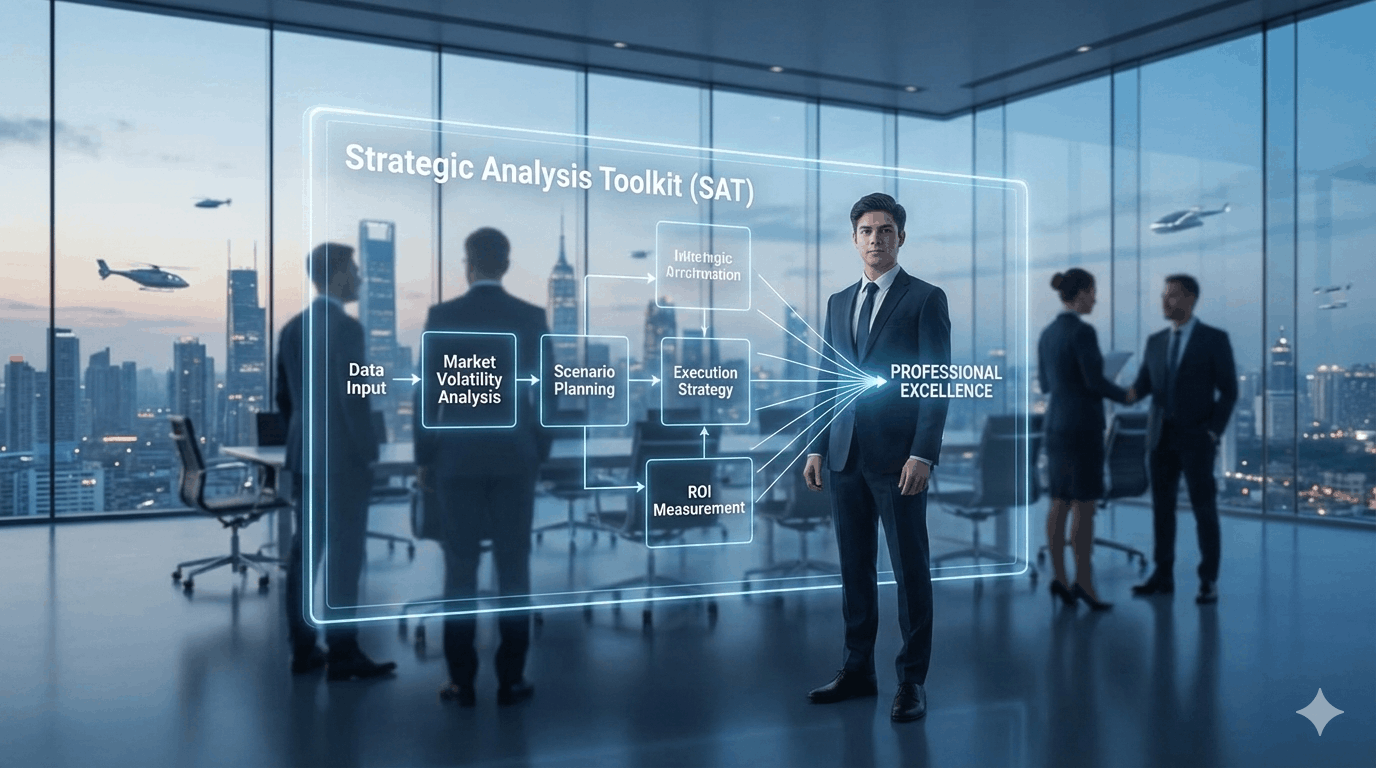
To bridge this gap, students need more than knowledge; they need a systematized workflow. This is where the Strategic Analysis Toolkit (SAT) serves as the ultimate bridge, turning academic potential into professional excellence.
Building the Foundation: Beyond Surface-Level Research
Professional standards require a deep dive into the why behind the what. A student might note that inflation is high; a professional explains how it affects the supply chain.
By using the SAT’s Discovery and Foundation module, students learn to organize their research into actionable frameworks:
- PESTLE Analysis: To map the macro-environment.
- Porter’s Five Forces: To gauge competitive intensity.
- Value Chain Analysis: To identify where internal value is actually created.
Having these tools in a single digital interface prevents analysis paralysis and ensures that no critical factor is overlooked.
Moving from Synthesis to Strategy
The most common mistake new consultants make is presenting a list of facts without a So What? Professional standards require synthesis.
During the Strategic Analysis phase, the Toolkit guides users through SWOT and GOST (Goals, Objectives, Strategies, Tactics). It pushes students to move from broad ideas to specific, measurable plans. Furthermore, by integrating the Ansoff Matrix and Blue Ocean Strategy, the SAT encourages students to think disruptively, finding uncontested market space rather than competing in crowded markets.
The Art of Implementation
A strategy is only as good as its execution. This is where most academic projects end and where professional work begins. Professionals use the TOWS Matrix to turn SWOT findings into actionable To-Do lists.
The SAT’s TOWS Prioritization tool is a game-changer for students. It teaches them that you cannot do everything at once; you must prioritize actions based on impact and feasibility. Coupling this with a Balanced Scorecard ensures the strategy remains holistic, addressing finance, customers, internal processes, and growth simultaneously.
Mastering Change and Professional Reporting
Finally, a professional strategist understands that change is hard. Using Kotter’s 8-Step Plan as part of the toolkit, students can plan for the human element of business, the buy-in phase.
The professional touch often shows in the final delivery. The SAT provides a structured environment for the PDCA Cycle (Plan-Do-Check-Act) and, crucially, for the Executive Summary and What-if Scenarios. Presenting a What-if scenario to a client is the hallmark of a high-level consultant; it shows you have anticipated risks and are prepared for multiple futures.
Why the Strategic Analysis Toolkit?
If you are a student looking to stand out or an educator looking to empower your cohort, the Strategic Analysis Toolkit is your competitive advantage. It removes the friction of formatting and organization, allowing you to focus entirely on strategic thinking.
Don’t just learn strategy; execute it like a pro.
Ready to level up? Start your first professional-grade analysis with SAT now.