
What is the Year-One Startup Survival Framework?
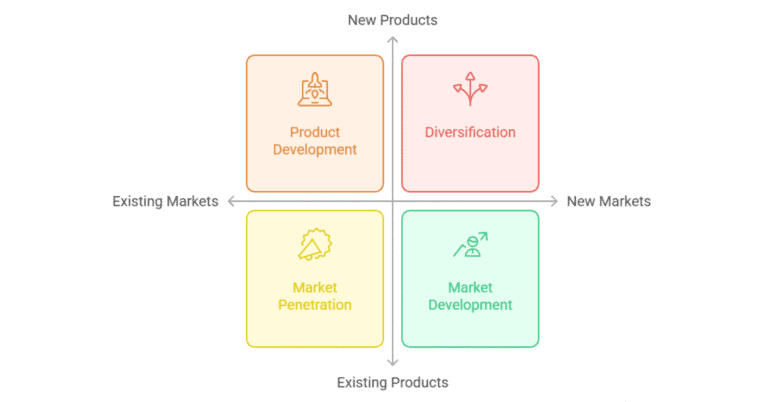
The Year-One Startup Survival Framework is a 4-stage operational model (Validation, Runway Management, Product-Market Fit, and Scalable Execution) that helps early-stage founders prioritize resources and mitigate early cash-out risks.
What Lessons Must Every New Founder Learn to Survive Year One?
The romanticized image of a startup founder is a dangerous trap. It often depicts a visionary who somehow knows what the market needs, builds a product in a caffeine-fueled garage, and wakes up a year later to a billion-dollar valuation.
In the cold light of reality, the statistics tell a different story. Nearly 90% of startups fail, and the number one reason isn’t poor coding or bad branding; it’s a lack of market need. They built a brilliant solution for a problem nobody was willing to pay to solve.
This is the Founder’s Fallacy:
Believing that intuition can replace data.
In year one, your gut feeling is a liability. To survive the most dangerous 12 months of your business’s life cycle, you need to shift from guessing to a culture of rigorous, structured analysis.
Why Do Early-Stage Startups Bleed Cash in the First Year?
Relying solely on intuition is like flying blind in a storm. You waste your limited seed money building features that your target market doesn’t need. You believe your biggest competitor is the business across the street, while missing the technological change that could soon make your entire business model outdated.
Worst of all, you end up competing in a saturated market, a Red Ocean, fighting over scraps with established giants who have ten times your marketing budget. Your margins shrink, your runway disappears, and the passion that fueled your launch turns into burnout.
You don’t need to hustle more; you need a system.
How Does Structured Strategic Analysis Help Startups Survive?
The most successful founders see strategy not as a fixed document, but as a continuous hypothesis that needs validation. Here are the specific frameworks that connect your initial idea to a sustainable, profitable business.
How Do PESTLE and Porter’s Five Forces Prevent Launching Blind?
Before investing in product development, you need to understand the landscape.
- A PESTLE Analysis: This serves as your early-warning system. By examining the Political, Economic, Social, Technological, Legal, and Environmental factors, you make sure you’re not developing a product that upcoming data privacy laws will immediately ban, or that an emerging AI trend will render obsolete.
- Porter’s Five Forces: Who really controls power in your industry? Are barriers to entry so low that fifty competitors will appear the day after you launch? Will your future suppliers cut into your margins? This framework helps you measure your market’s competitive strength so you can position your startup wisely.
How Does Value Chain Analysis Help Identify Unique Value Add?
Startups are characterized by extreme scarcity. You lack the resources to excel at everything.
A Value Chain Analysis forces you to break your business into primary and support activities. Are you generating your true value through your innovative R&D, or is your unique advantage in delivering it to customers efficiently? By precisely identifying where your startup creates outsized value, you can focus your funding there and ruthlessly outsource or minimize the rest.
How Can Blue Ocean Strategy Make Startup Competition Irrelevant?
Stop attempting to create a marginally improved version of an existing product. In the first year, competing head-to-head on price or features with established players is a guaranteed failure.
Instead, apply the Blue Ocean Strategy to discover uncontested market space. Using the ERRC Grid (Eliminate, Reduce, Raise, Create), you can remove costly industry standards your customers don’t value and introduce new value that makes the current competition irrelevant. Don’t compete for a piece of a shrinking market; build a new one.
How Does the PDCA Cycle Guide Continuous Product Iteration?
The era of the big product launch is gone. To succeed in your first year, focus on ongoing improvement.
The PDCA Cycle (Plan-Do-Check-Act) is a scientific approach you can use in your business.
- Plan: Develop a hypothesis about your product or marketing.
- Do: Conduct a small, low-risk test.
- Check: Evaluate the data against your expectations.
- Act: Standardize what works and eliminate what doesn’t.
This repetitive process guarantees that when you expand, you are growing a tested, profitable model rather than just a passionate guess.
How Can Founders Transition From Planning to Execution?
Knowing the frameworks is one thing; executing them smoothly is another. Too many founders spend weeks building complex strategy templates in cluttered spreadsheets or disconnected slide decks. When your data is siloed, your strategy stalls.
Your time is your most valuable asset. Stop building the machine from scratch and start utilizing the Strategic Analysis Toolkit.
We’ve made professional consulting methodologies accessible to everyone, integrating all your essential frameworks, from your foundational PESTLE analysis to your Blue Ocean Strategy and PDCA cycles, into a single, dynamic, interconnected platform. Transform weeks of chaotic research into hours of investor-ready insights.
Don’t let your startup become just a statistic.
Build a strong foundation, plan your growth, and perfect your strategy today.
Frequently Asked Questions
What is the Year-One Startup Survival Framework?
The Year-One Startup Survival Framework is a 4-stage operational model that helps early-stage founders prioritize resources, validate demand, and manage capital burn to prevent early failure.
What is the most common reason startups fail in their first year?
The leading cause of first-year startup failure is running out of cash, often because founders scale marketing or hiring before achieving true product-market fit.
How much cash runway should a startup maintain during year one?
A year-one startup should aim for at least 12 to 18 months of cash runway, giving it enough time to iterate on the core product without entering emergency fundraising mode.
What are the primary stages of the survival framework?
The framework consists of four core phases: Problem Validation, Unit Economic Testing, Runway Optimization, and Go-To-Market Execution.
How do you know when a startup has achieved Product-Market Fit?
Product-Market Fit is typically indicated by strong cohort retention, consistent organic customer referrals, and a Customer Acquisition Cost (CAC)-to-Lifetime Value (LTV) ratio that supports sustainable growth.