
Telemedicine is no longer a convenient alternative; it is the backbone of modern healthcare.
However, moving a physical clinic into a digital-first ecosystem is not as simple as buying a Zoom license. It requires a tectonic shift across operations, culture, and strategy.
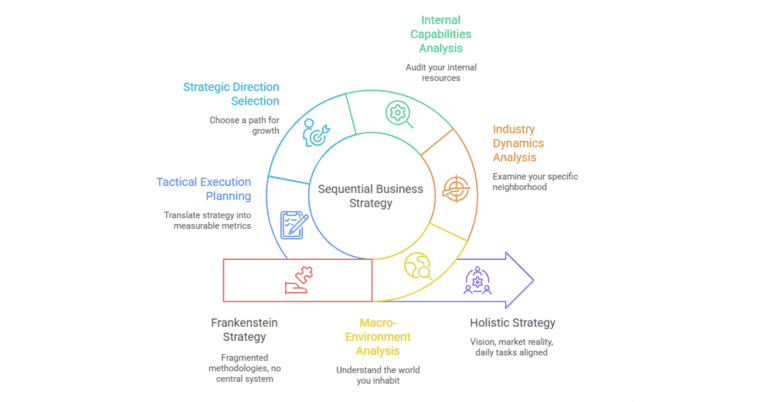
If you are a healthcare leader, you’ve likely felt the pressure. With shifting regulations, rising patient expectations for hyper-personalization, and the explosion of AI-driven diagnostics, the wait-and-see approach is effectively a wait-and-fail one. To succeed, you need a structured methodology. Here is how you can use world-class strategic frameworks to plan your telemedicine transformation, all of which are integrated into the Strategic Analysis Toolkit (SAT).
Phase 1: Reading the Room (The External Scan)
Before you invest, you must understand the world around you.
We begin with a PESTLE analysis. The Legal and Technological factors are moving at light speed. Are your data governance protocols compliant with the latest AI-interoperability mandates? Are sociocultural shifts favoring asynchronous messaging over live video?
Next, we examine the competition using Porter’s Five Forces. Telemedicine has lowered the barrier to entry, so your local clinic now competes with global health-tech giants. By analyzing the Bargaining Power of Patients and the Threat of New Entrants, you can pinpoint where your niche truly lies.
Phase 2: Looking Inward (The Internal Audit)
Strategy isn’t just about the market; it’s about your engine. With Value Chain Analysis, you can dissect every touchpoint in your patient journey, from initial online booking through remote patient monitoring to billing. Where is the friction? Where are the costs leaking?
All these insights (both internal and external) culminate in your SWOT analysis. But here’s the consultant’s secret: a SWOT is useless if it just sits in a 2×2 grid. It’s merely a snapshot. To move forward, you need to synthesize it into a growth strategy.
Phase 3: Choosing Your North Star
How do you plan to grow? The Ansoff Matrix helps you decide. Are you sticking with Market Penetration (more digital services for existing patients) or pursuing Market Development (taking your specialist services into new geographic territories)?
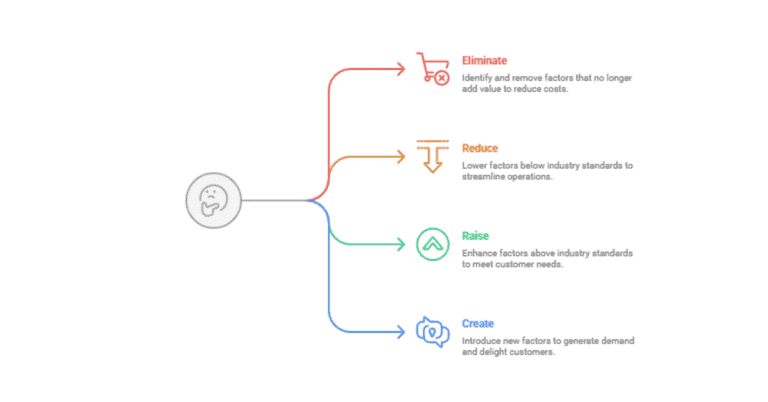
If the market feels too crowded, it’s time for a Blue Ocean Strategy. Don’t compete solely on price or the number of doctors. Create a Blue Ocean by offering something unique, such as an AI-integrated chronic care model that makes your competition irrelevant.
Phase 4: Turning What into How
This is where most plans crumble: the transition from high-level vision to daily tasks. We address this with the TOWS Matrix. Unlike SWOT, TOWS forces you to cross-link your Strengths with Opportunities (to create SO strategies) and your Weaknesses with Threats (to create WT defensive moves).
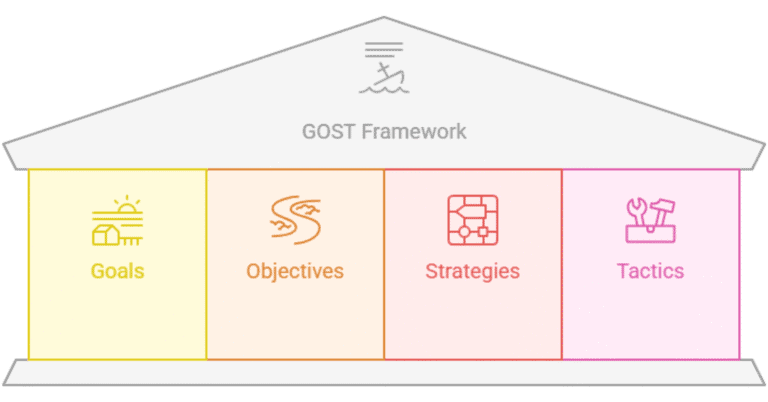
Because you can’t do everything at once, we use TOWS Prioritization. This keeps your team focused on high-impact digital initiatives that move the needle, rather than getting distracted by shiny-object tech. From there, we build the GOST, defining your Goals, Objectives, Strategies, and Tactics in a clear hierarchy that every department can follow.
Phase 5: Managing People and Performance
Digital transformation is 20% technology and 80% people. To ensure your medical staff doesn’t revolt, we implement Kotter’s 8-Step Plan. From creating a Sense of Urgency to instituting the Change in your clinic’s culture, this framework is your roadmap for change management.
To keep the lights on and quality high, we use the Balanced Scorecard. This ensures you aren’t just looking at Financial metrics but also Patient Perspective, Internal Processes, and Learning & Growth. As you roll out, the PDCA Cycle (Plan-Do-Check-Act) provides a loop for continuous improvement, allowing you to pivot as soon as you see data from your initial pilot.
The SAT Edge: Strategy at the Speed
Manually running these twelve frameworks would take a team of consultants months and cost a fortune. The Strategic Analysis Toolkit (SAT) automates the entire process.
By entering your data into SAT, you generate a comprehensive Executive Summary that integrates these frameworks. Even better, you can run What-if Scenarios. What if a new competitor enters the market? What if reimbursement rates for virtual care drop by 15%? SAT helps you see the future before it happens.
Don’t leave your digital transformation to chance. Use the tools pros rely on.
Ready to build your roadmap? Start your analysis with the Strategic Analysis Toolkit now.