
Good enough is a dangerous phrase.
Whether you are leading a high-volume Orthopedics department or a boutique Dermatology practice, the pressure to optimize is relentless. Here is the candid truth: most medical leaders try to optimize through sheer willpower rather than structured analysis.
If you want to move from surviving the healthcare treadmill to leading a thriving, resilient specialty, you need to stop guessing. You need a toolkit.
Step 1: Diagnosing the Medical Market Reality
Before you can optimize, you must understand the forces shaping your specialty. We begin with a PESTLE analysis. This year, the T (Technological) and L (Legal) factors, such as AI-driven diagnostics and shifting telehealth regulations, are moving faster than most practices can keep up with.
Next, we apply Porter’s Five Forces. Who really holds the power in your specialty? Is it the bargaining power of insurers (the Buyers)? Or the threat of new entrants, such as retail clinics encroaching on primary care? Understanding these forces helps you stop fighting losing battles and start positioning your specialty where barriers to entry are high.
Finally, we look at your Value Chain Analysis. Every step, from the moment a patient calls for a referral to their final follow-up, is an opportunity to create value or lose it. If your administrative intake is a bottleneck, your world-class surgeons are essentially stuck in traffic.
Step 2: From Analysis to Actionable Strategy
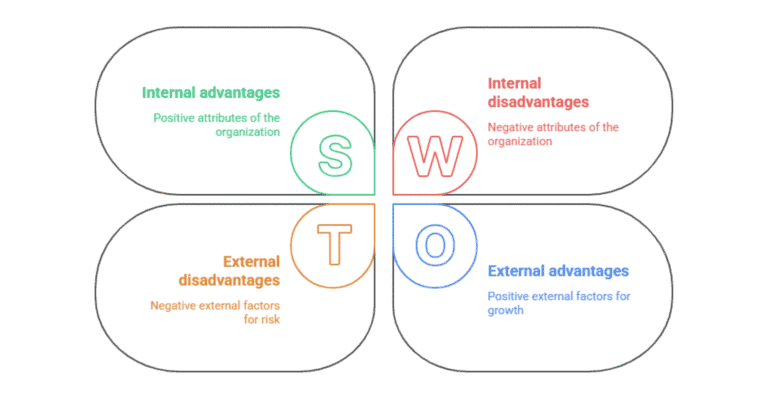
Once the foundation is set, it’s time for the SWOT Analysis. But don’t just list bullet points on a napkin. You need to align your Strengths and Weaknesses with your GOST (Goals, Objectives, Strategies, and Tactics).
Strategy without tactics is the slowest route to victory. Tactics without strategy is the noise before defeat.
If your goal is to be the #1 cardiac center in the region, your Ansoff Matrix might indicate that Product Development, such as introducing a new minimally invasive valve procedure, is a smarter move than simply trying to Market Penetrate with old services.
If your market is oversaturated, we use the Blue Ocean Strategy. Don’t compete on price or wait times; create a Blue Ocean by offering something no one else does, such as an integrated wellness and recovery suite that traditional hospitals ignore.
Step 3: The Blueprint for Implementation
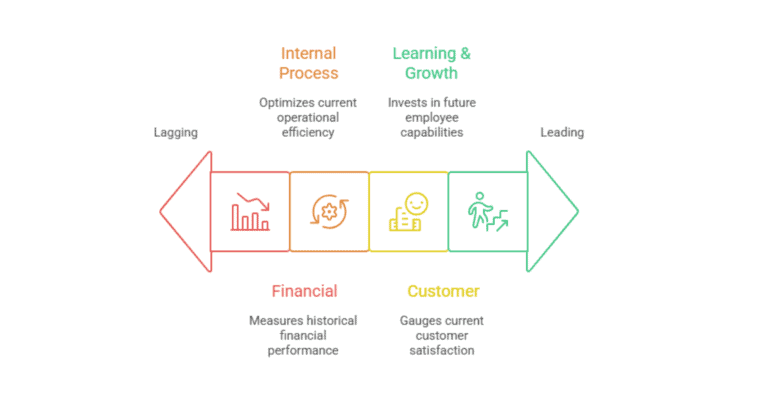
Strategy is often where doctors get bored. They want results. This is where the TOWS Matrix and TOWS Prioritization come in. Unlike a standard SWOT, TOWS forces you to ask: How do we use our Strengths to overcome these specific Threats? To track this, we deploy the Balanced Scorecard. In healthcare, a profitable year is a failure if patient outcomes have dipped or staff burnout is at an all-time high. The Balanced Scorecard ensures you are measuring:
- Financials: The ROI of new equipment.
- Patient Perspective: Net Promoter Scores and outcomes.
- Internal Processes: Efficiency of the clinical workflow.
- Learning & Growth: Continued education and staff retention.
Step 4: Making the Change Stick
The hardest part of optimization isn’t the data; it’s the people. Doctors are notoriously resistant to business jargon. To address this, we use Kotter’s 8-Step Plan for Leading Change. It starts with creating a Sense of Urgency and building a Guiding Coalition. You can’t mandate optimization from an ivory tower; you have to build a volunteer army within the clinic.
Once the change begins, the PDCA Cycle (Plan-Do-Check-Act) ensures optimization is iterative. We don’t set and forget. We use Executive Summaries and What-if Scenarios to simulate the future. What if Medicare reimbursement drops by 10% next quarter? What if our lead specialist retires?
Why the Strategic Analysis Toolkit?
You could build these matrices in Excel or draw them on a whiteboard. But you’re a medical professional; your time is better spent with patients or leading your team.
The Strategic Analysis Toolkit is designed to automate the heavy lifting of business strategy. From PESTLE to the Balanced Scorecard, our platform provides the structure, logic, and professional outputs you need to present to boards, investors, or your partners.
Don’t just practice medicine. Lead your specialty with the same precision you apply in the operating room.
Are you ready to see the data behind your specialty’s potential?