In business, the only constant is the speed of change.
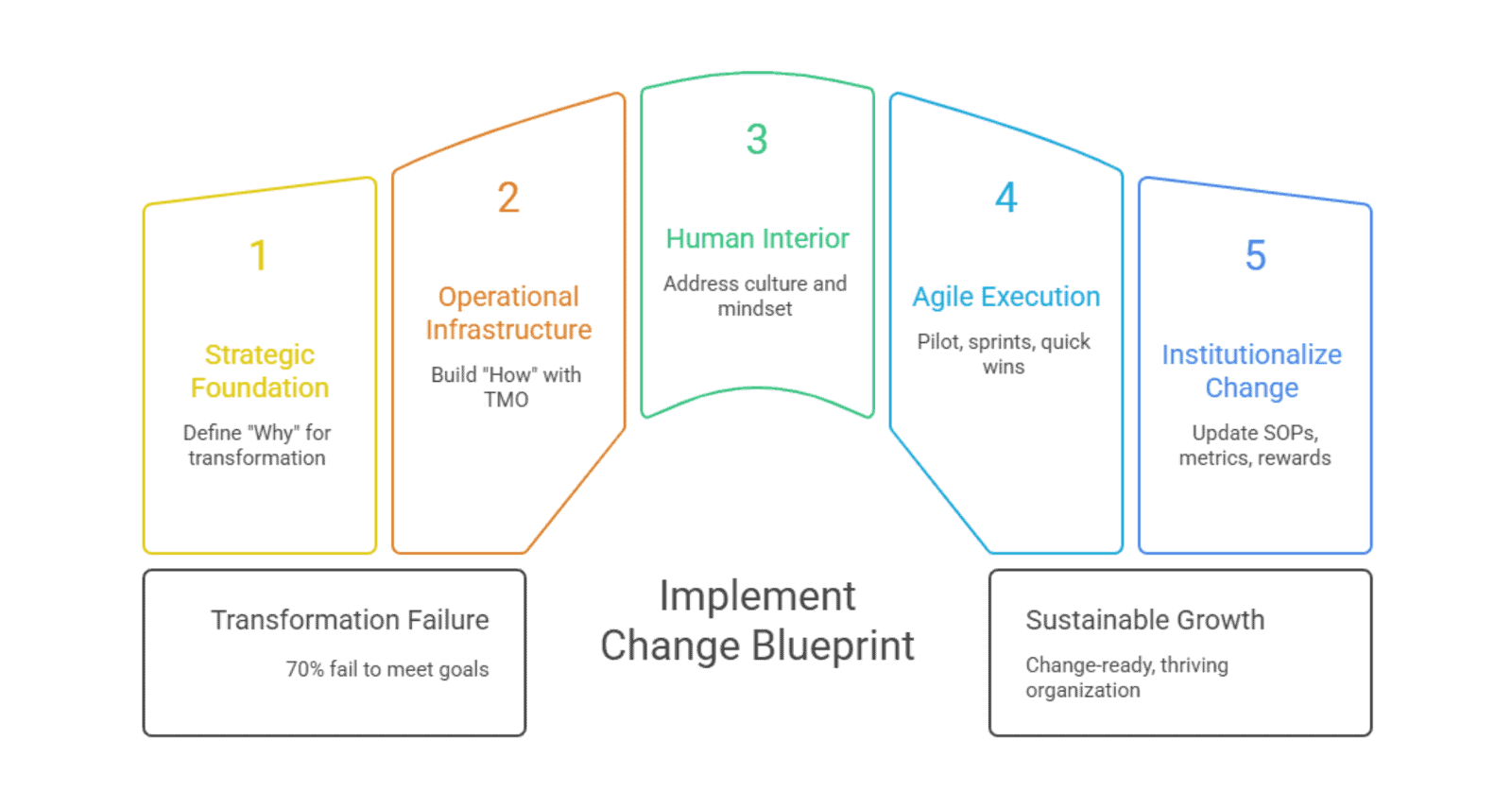
Data from McKinsey consistently show that roughly 70% of large-scale transformation programs fail to meet their goals. Most of these failures don’t happen because the strategy was wrong; they happen because the execution lacked a structural blueprint.
Transformation is not a repair job on a broken machine; it is a fundamental redesign of the organization’s DNA. To succeed, you need more than a vision; you need a Change Blueprint.
Phase I: The Foundation (The Strategic “Why”)
Before a single process is altered, the “Why” must be unshakeable. Transformation is expensive, disruptive, and exhausting. If the foundation is weak, the organization will revert to its old habits under pressure.
Strategic Clarity
Transformation begins with an honest audit of the current state. Are you transforming because of a market shift, a technological disruption, or internal stagnation? Leadership must define the “North Star”, a future state that is so compelling it outweighs the comfort of the status quo.
The Power of Narrative
Data influences minds, but stories move people. A Change Blueprint requires a Strategic Narrative. This isn’t a corporate memo; it’s a story where the employees are the protagonists. It must answer: What is our shared future, and why is your role in it indispensable?
Executive Alignment
A “divided house” cannot lead a transformation. We often see executives who are “compliant” (they say yes in meetings) but not “committed” (they don’t change their own behavior). Proper alignment means every leader speaks with one voice and models the new behaviors first.
Phase II: The Infrastructure (The Operational “How”)
Once the “Why” is established, you need the machinery to build the “How.” This is where many initiatives fail; they attempt to run a massive transformation as a “side project” for already overworked managers.
The Transformation Management Office (TMO)
A TMO is the heartbeat of your blueprint. Unlike a standard Project Management Office, the TMO has the authority to break silos and reallocate resources. It serves as the single source of truth for progress.
Resource Allocation
You cannot transform into a “business as usual” budget. Transformation requires dedicated capital and, more importantly, dedicated time. If your top performers are 100% utilized on daily operations, your transformation is already dead in the water.
Data-Driven Feedback Loops
Establish your KPIs (Key Performance Indicators) and OKRs (Objectives and Key Results) early.
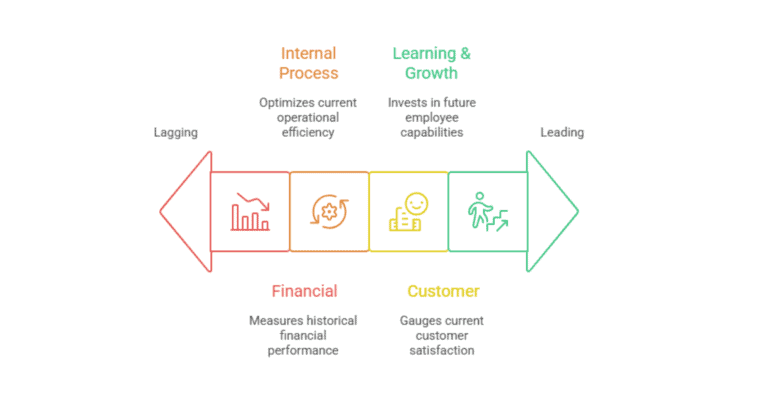
- Lagging Indicators: Revenue growth, market share.
- Leading Indicators: Adoption rates of new software, employee sentiment scores, or the speed of a new cross-departmental process.
Phase III: The Human Interior (Culture & Mindset)
You can install the best software in the world and design the most efficient workflows, but if your people reject the change, the system will fail. The “Human Interior” is the most complex part of the blueprint.
Navigating the Change Curve
Every employee goes through a psychological journey during transformation. Understanding the Kübler-Ross Change Curve helps leaders meet employees where they are, whether in denial, anger, or, eventually, integration.
Thawing the “Frozen Middle”
Middle management is often the biggest roadblock to change. Why? Because they have the most to lose and are under the most pressure from both above and below. To “thaw” the middle, you must involve them in designing the blueprint rather than just handing them the instructions.
Psychological Safety
Transformation requires experimentation, and experimentation involves the possibility of failure. If your culture punishes mistakes, your people will play it safe. Creating psychological safety ensures that team members feel empowered to point out flaws in the blueprint without fear of retribution.
Phase IV: The Build (Execution & Iteration)
A blueprint is a living document. In a volatile market, a rigid 5-year plan is a liability. Execution must be agile.
The Pilot Method
Never roll out a massive change enterprise-wide on day one. Start with a “Pilot”, a contained department or region where you can test the blueprint, gather data, and fail small.
Sprints vs. Marathons
Break the transformation into 90-day “sprints.” This creates a sense of urgency and allows for frequent “course corrections.” It also prevents change fatigue by enabling the organization to celebrate milestones more frequently.
The Importance of Quick Wins
To maintain momentum, you need “Early Wins.” These are low-hanging fruits that demonstrate the transformation is working. When employees see that the new process saves them an hour of paperwork per day, they become advocates for the next, more complex phase.
Phase V: The Handover (Sustaining the Change)
The final phase of the blueprint is making the “new way” the “only way.” This is the transition from a “Transformation Project” to “Business as Usual.”
| Critical Success Factor | Old Way (Stagnation) | New Way (Transformation) |
| Governance | Top-down command | Distributed leadership |
| Pace | Annual planning | Continuous iteration |
| Talent | Skill-based hiring | Mindset & Agility-based hiring |
| Technology | Cost center | Strategic enabler |
Institutionalizing the Change
Update your SOPs (Standard Operating Procedures), your performance review metrics, and your reward systems. If you want people to collaborate but still reward them based on individual silos, collaboration will stop the moment you stop watching.
The Culture of Permanent Evolution
The ultimate goal of a Change Blueprint isn’t just to reach a destination; it’s to build an organization that is “Change-Ready.” In a world of AI and shifting global economics, the most valuable asset a company has is its ability to learn and adapt faster than the competition.
The Future-Proof Organization
Organizational transformation is a daunting undertaking, but it is the only path to long-term relevance. By focusing on a structured blueprint, balancing the strategic foundation with the human element and agile execution, you move from the 70% of companies that fail to the 30% that thrive.
A blueprint provides the structure, but your people give the power. Execute with clarity, lead with empathy, and never stop iterating.